Health and Safety, Environment and Quality Audits
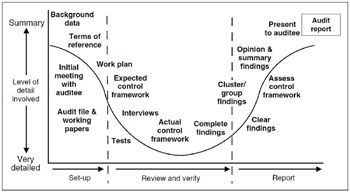
This vision, first described in our Introduction, provides a powerful image which an effective lead auditor should have in their mind of the job to be done, the challenges to be met and the best responses to those challenges, and how to execute each stage of the audit successfully.
The major steps in The Audit Process Roller Coaster journey as shown in Figure 4.1 are:
familiarization with the auditee s business environment
meeting the auditee and agree on terms of reference (ToR)
developing a risk-based work plan
establishing the expected business control framework (BCF)
reviewing and verifying selected controls
identifying and assessing the strength and weakness of the controls
assessing the strength of the overall BCF
determining the audit opinion and key messages for management
reporting.
An audit starts at a leisurely pace whilst the audit team climbs up to a high vantage point, in a manner of speaking, so they can obtain sufficient up-to-date background information to become familiar with the auditee s area of responsibility.
After completing this familiarization, the audit team is in the best position to create a risk-based work plan.
The audit team now knows that the time available for set-up is behind them and so nerves start to appear as they feel the pace begin to pick up and the pressure of...