OVERVIEW
Numerous laboratory studies have concluded that the effective permeability of any reservoir fluid is a function of the reservoir fluid saturation and the wetting characteristics of the formation. It becomes necessary, therefore, to specify the fluid saturation when stating the effective permeability of any particular fluid in a given porous medium. Just as k is the accepted universal symbol for the absolute permeability, k o, k g, and k w are the accepted symbols for the effective permeability to oil, gas, and water, respectively. The saturations, i.e., S o, S g, and S w, must be specified to completely define the conditions at which a given effective permeability exists.
Effective permeabilities are normally measured directly in the laboratory on small core plugs. Owing to many possible combinations of saturation for a single medium, however, laboratory data are usually summarized and reported as relative permeability.
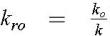
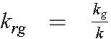
The absolute permeability is a property of the porous medium and is a measure of the capacity of the medium to transmit fluids. When two or more fluids flow at the same time, the relative permeability of each phase at a specific saturation is the ratio of the effective permeability of the phase to the absolute permeability, or:
where k ro = relative permeability to oil
k rg = relative permeability to gas
k rw = relative permeability to water
k = absolute permeability
k o = effective permeability to oil for a given oil...


 TABLE OF CONTENTS