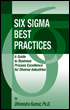
Six Sigma Best Practices: A Guide To Business Process Excellence For Diverse Industries
A Six Sigma team's responsibility does not end once a recommended solution has been implemented. At this point, the project represents a "milestone" accomplishment, yet significant effort still will be required to take the project to completion. The team has the responsibility of leading/guiding several activities, which are critical for project completion:
| 6.1 | Self-Control | ||||||||||||||||||||
| 6.2 | Monitor Constraints | ||||||||||||||||||||
| 6.3 | Error Proofing
| ||||||||||||||||||||
| 6.4 | Statistical Process Control (SPC) Techniques
| ||||||||||||||||||||
| 6.5 | Final Project Summary
| ||||||||||||||||||||
| 6.6 | Summary |
References
Retaining the gains made from a Six Sigma project is important. Concepts and ideas that the team may need to follow/implement will now be presented. A combination of these ideas may be required to retain the improvements made.
Once a recommended solution has been implemented, the team must think about the following questions:
Is the implemented solution capable of meeting the expected project goals?
Is the project holding Six Sigma metrics goals?
Are data from the implementation solution validating the expected relationship between the independent variables...