6.1 Introduction
The development of switched-capacitor (SC) direct-current-to-direct-current (DC-DC) converters is motivated by the ever-increasing demands for a small-form-factor (i.e., small-size and light-weight), high-conversion-efficiency, and low-cost power management system, which is the best candidate suitable to meet the needs of continuously shrinking portable electronic devices such as MP3 players, cellular phones, PDAs, and so on.
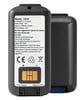
Modern portable electronic devices must be powered by batteries (standard Lilon, Ni/H, solar-cell, fuel-cell, and so on). When being used for the first time, a battery is able to supply a full-range dc voltage. As time passes by, the battery voltage drops at a certain rate, which is determined by the type of battery and the load current requirement.
Strictly speaking, the battery voltage does not decrease with time linearly. In fact, it normally decreases at a relatively slow rate before the operation time reaches a threshold point. Once the threshold point is passed, the battery voltage drops abruptly. For example, the nominal output voltage of a standard AA-type Lilon battery decreases from 4.05 V to 3.45 V within the first 4 hours of usage time if a 200 mA load current is required. Once the first 4 hours are over, the battery voltage begins dropping with a much sharper slope, and its value is reduced from 3.45 V to 2.25 V within the next 30 minutes. Similar arguments apply to other battery types such as the solar-cell battery and the Ni/H battery. Such variations in the battery voltage will cause undesirable effects on the...


 TABLE OF CONTENTS