OVERVIEW
For this circumstance, flow is regarded as parallel to the inner and outer membrane surfaces, and the flow of each phase is regarded as concurrent with or countercurrent to the other phase. Furthermore, we are speaking of what is regarded as "plug flow"; that is, no forward or backward mixing. The juxtaposition is diagrammed in Figure 6.1. One phase, L, is the reject; the other phase, V, is the permeate. The reject is the continuation of the feedstream.
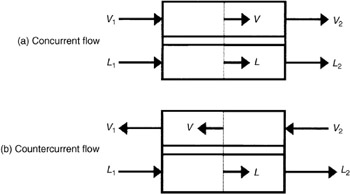 Figure 6.1: Differential permeation as a continuum
 Perhaps the simplest embodiment of a membrane cell is tubular, with the tubeside flow concurrent or countercurrent to the flow outside the tube, as described in Chapter 1. The tube may be positioned inside another tube, called a tube in a tube, so that this latter flow is within the annulus. Such an arrangement is diagrammed schematically in Figure 6.2.
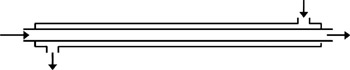 Figure 6.2: Single-pass tube-in-tube heat exchanger
 Alternately, the cell may be designed similarly to a shell-and-tube heat exchanger, with flow inside the tubes and on the outside or shell side. The shell-side flow may be strictly parallel to the tubes or also across the tubes, or tube bundle, and directed by the use of baffles and baffle cuts. Such a layout is illustrated in Figure 6.3, with more information about the intricacies provided by Hoffman. [1] There is an analogy with the treatment of absorbers, strippers, and distillation columns as a continuum, described in terms of the rate of mass...


 TABLE OF CONTENTS