Modern Actuarial Risk Theory

Hints for the Exercises

CHAPTER 1

Section 1.2

1.

Prove Jensen's inequality: if v( x) is convex, then E[ v( X)] ? v(E[ X]). Use the following definition of convexity: a function v( x) is convex if, and only if, for every x 0 a line l 0( x) = a 0 x + b 0 exists, such that l 0( x 0) = v( x 0) and moreover l 0( x) ? v( x) for all x [usually, l 0( ) is a tangent line of v( )]. Pay special attention to the case v( x) = x 2.

2.

Also prove the reverse of Jensen's inequality: if E[ v( X)] ? v(E[ X]) for every random variable X, then v is convex.

3.

Prove: if E[ v( X)] = v(E[ X]) for every random variable X, then v is linear.

4.

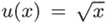
A decision maker has utility function , x ? 0. He is given the choice between two random amounts X and Y, in exchange for his entire present capital w. The probability distributions of X and Y are given by

x

Pr[ X = x]

400

0.5

900

0.5

and

y

Pr[ Y = y ]

100

0.6

1600

0.4

Show that he prefers X

UNLIMITED FREE
ACCESS
TO THE WORLD'S BEST IDEAS

SUBMIT
Already a GlobalSpec user? Log in.

This is embarrasing...

An error occurred while processing the form. Please try again in a few minutes.

Customize Your GlobalSpec Experience

Category: V-ribbed Pulleys
Finish!
Privacy Policy

This is embarrasing...

An error occurred while processing the form. Please try again in a few minutes.