Modern Actuarial Risk Theory

| 1. | Determine the percentage of the basic premium to be paid by a Dutch driver, who originally entered the bonus-malus scale at level 100%, drove without claim for 7 years, then filed one claim during the eighth policy year, and has been driving claim-free for the three years since then. Would the total of the premiums he paid have been different if his one claim occurred in the second policy year? |
|
Answers
| 1. | 45%; 760% vs. 900% |
| 1. | Prove (6.8). |
|
| 2. | Determine P 2 with P as in (6.1). What is the meaning of its elements? Can you see directly from this that l(2) = l( ?) must hold? |
|
| 3. | Determine e( ?) in the example with three steps in this section if in state 2, instead of c the premium is a. Argue that the system can now be described by only two states, and determine P and l( ?). |
|
| 4. | Show that e( ?) < 1 in (6.9) for every a and c with a < c. When is e( ?) close to 1? |
|
| 5. | Recalculate (6.11) for a claim at the end of the policy year when the interest is i. |
|
| 6. | [ ?] Calculate the Loimaranta efficiency (6.9) by method (6.17) (6.19). |
|
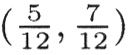
| 7. | Determine the value of ? such that the transition probability matrix P has vector |