Risk Analysis in Building Fire Safety Engineering

Chapter 10: Probabilistic Modelling of Barrier Resistance

10.1 Introduction

The aim of the research described in this chapter is to determine the probability characteristics of the time to failure for light timber-framed walls with gypsum board exposed to a fire. The reader is referred to Refs [16,17,71] for further details.

The modes of failure considered are:

  1. Insulation, average temperature mode: the average temperature rise on the ambient side of the wall exceeds some nominated value. In Australian Standard AS1530.4 [48] this value is 140 C.

  2. Insulation, maximum temperature mode: the maximum temperature rise on the ambient side of the wall exceeds some nominated value. In Australian Standard AS1530.4 [48] this value is 180 C.

  3. Integrity initiated failure mode: gypsum boards begin to crack in areas where the temperature rises above 400 C. Since this temperature exceeds insulation failure temperatures, failure due to integrity alone will never happen. However, pieces of gypsum on the fire side, formed by the cracking, will slough off (i.e. fall away) when the temperature exceeds 700 C. The fire then directly impinges on the timber studs and destroys them in a matter of minutes. Failure in this manner is referred to as integrity initiated failure .

  4. Structural collapse.

10.2 Overview of the Time of Failure Model

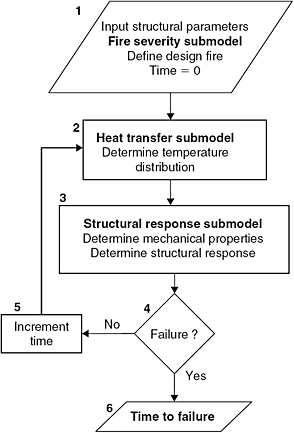
Figure 10.1 shows the general flowchart for the time of failure model.


Figure 10.1: General flowchart for time of failure model.

It is made up of three submodels:

  1. The fire severity submodel

  2. The heat transfer submodel

  3. The structural response submodel.

Each of these three submodels...

UNLIMITED FREE
ACCESS
TO THE WORLD'S BEST IDEAS

SUBMIT
Already a GlobalSpec user? Log in.

This is embarrasing...

An error occurred while processing the form. Please try again in a few minutes.

Customize Your GlobalSpec Experience

Category: Fireproofing Services
Finish!
Privacy Policy

This is embarrasing...

An error occurred while processing the form. Please try again in a few minutes.