8.1 Introduction
The Stokes wave theory is both the oldest and most well-studied of the nonlinear theories. The reason for studying it in some detail is, however, that in addition to being the simplest it also exhibits most of the effects associated with nonlinear waves.
The theory was first developed by Stokes (1947), whence its name, and reprinted with some additions in the collected papers Stokes (1880).
One of those characteristics is illustrated in Fig. 8.1.1 which shows the difference between the surface profile of a sinusoidal wave in intermediate depth of water and that of a "real" wave. While the sinusoidal wave has equally high and equally long crests and troughs the real wave has shorter and higher crests and longer and shallower troughs.
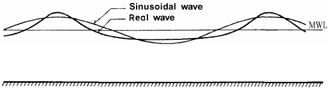 Figure 8.1.1: Comparison of wave profiles.
 In consequence of the results of Chapter 7, we again consider the basic equations. For convenience we repeat the equations in dimensional form here. They are:
| (8.1.1) | 
|
with the boundary conditions:
| (8.1.2) | 
|
| (8.1.3) | 
|
| (8.1.4) | 
|
where C( t) is the arbitrary function in the generalized Bernoulli equation. The variables used are defined in Fig. 7.2.1 which also shows the coordinate system is place with the x-axis (i.e. z = 0) on the Mean water surface MWS.MWS
In addition we assume the waves are periodic in x which we express as
| (8.1.5) | 
|
Thus we are returning to dimensional form of the equations and seek solutions based on the assumption, that if we define the parameter ?

 TABLE OF CONTENTS