Practical Guide to Rotational Moulding

4.7: Amorphous Materials

4.7 Amorphous Materials

4.7.1 Polyvinyl Chloride (PVC)

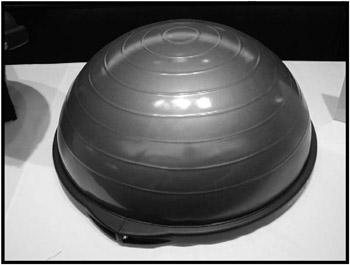
These materials are usually rotomoulded in the form of plastisols: however, powdered grades are available. The plastisols are dispersions of PVC in other compounding ingredients such as plasticisers, stabilisers, fillers and pigments. A major advantage of PVC is that it has a wide range of flexibilities depending on the ingredients of the plastisol see Figure 4.8). This material is widely used to manufacture flexible toys. An application is shown in Figure 4.7.


Figure 4.8: Rotomoulded polycarbonate part

Figure 4.7: PVC exercise / fitness device

4.7.2 Fluoropolymers

Materials such as polyvinylidene fluoride (PVDF) and ethylene-chlorotrifluorethylene (ECTFE) can be rotomoulded. Although expensive they provide excellent chemical resistance and high temperature capability. They are currently used for chemical vessels or for protective linings.

UNLIMITED FREE
ACCESS
TO THE WORLD'S BEST IDEAS

SUBMIT
Already a GlobalSpec user? Log in.

This is embarrasing...

An error occurred while processing the form. Please try again in a few minutes.

Customize Your GlobalSpec Experience

Category: Pulsation Dampeners
Finish!
Privacy Policy

This is embarrasing...

An error occurred while processing the form. Please try again in a few minutes.