Practical Guide to Rotational Moulding

The bulk properties of a polymer can often be altered considerably by the incorporation of additives. In general, additives should have the following features:
They should be efficient in their function.
They should be stable under processing conditions.
They should be stable under service conditions.
They should be non-toxic and not impart taste or odour.
They should be cheap.
They should not adversely affect the properties of the polymer.
The following sections consider some of the main additives used in rotomouldable plastics.
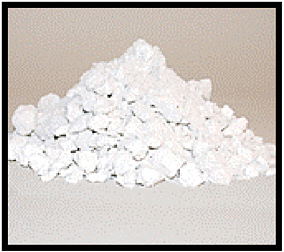
The term filler is usually applied to solid additives incorporated into the polymer to modify its physical properties (Figure 4.9). Inert particulate fillers include materials such as calcium carbonates, china clay, talc and barium sulfate, which can improve modulus, hardness, tensile strength and heat deformation resistance. Normally the finer the particle size, the higher the value of these properties - at least up to an optimum loading of filler. Other factors affecting a filler s performance include particle shape, chemical nature, and any impurities such as grit. Fillers are also important from a commercial point of view, as they will substantially reduce the cost of the compound.
Rubbery materials are often incorporated into rigid amorphous thermoplastics to improve their toughness. Examples include butadiene-acrylonitrile rubbers in PVC and ethylene-propylene rubbers in polypropylene. The incorporation of these rubbers improves the toughness of the final compound,...