Writing Effectively, Fourth Edition

Session B: Writing for Results

1 Introduction

The first rule for successful communicating is to give it a bit of thought. You should ask yourself the following questions.

  • Who do I need to communicate with?

  • What result do I want to achieve?

  • What impression do I want to give?

Apart from 'self-communication' (private diaries, personal notes, records placed on file, and so on) all communication is designed:

  • to reach some other person;

  • to achieve a result.

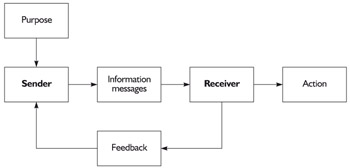
The result the purpose may be to ask, order or persuade the other person to do something; or it may be to provide them with information. Either way, the end result will be to generate action of some kind.

We can present all this as follows.

Often, as this diagram suggests, there is an exchange of some kind: the receiver becomes a sender, and feeds back information to the sender of the original message.

The trouble with communication is that there is such an awful lot of it going on. If you want your written communications to be effective and achieve the desired results, you need to do everything you can to make sure that:

  • they reach their destination;

  • the receiver notices them;

  • the receiver understands and acts on them.

Some people are a lot more successful at communicating in writing than others. In this part of the workbook, we'll see why and how.

UNLIMITED FREE
ACCESS
TO THE WORLD'S BEST IDEAS

SUBMIT
Already a GlobalSpec user? Log in.

This is embarrasing...

An error occurred while processing the form. Please try again in a few minutes.

Customize Your GlobalSpec Experience

Category: Field Intensity Meters
Finish!
Privacy Policy

This is embarrasing...

An error occurred while processing the form. Please try again in a few minutes.