3G Wireless Networks
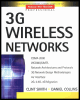
Featuring many examples showing network architectures, internetworking, protocol use, and integration, this book supplies the answers you need for key networking decisions.
 TABLE OF CONTENTS
 To better understand the issues with third-generation (3G) and the interim 2.5G radio and network access platforms, it is essential to know the fundamentals of second-generation (2G) systems. This chapter will attempt to cover a vast array of topics with reasonable depth and breath related to some of the more prevalent 2G wireless mobility systems that have been deployed.
Second-generation is the generalization used to describe the advent of digital mobile communication for cellular mobile systems. When cellular systems were being upgraded to 2G capabilities, the description at that time was digital and there was little if any indication of 2G since voice was the service to deliver, not data. Personal communication systems at the time of their entrance were considered the next generation of communication systems and boasted about new services that the subscriber would want and could be readily provided by this new system or systems. However, Personal Communication Services (PCS) took on the same look and feel as those originating from the cellular bands.
Second-generation mobility involves a variety of technology platforms as well as frequency bands. The issues regarding 2G deployment are as follows:
Capacity
Spectrum utilization
Infrastructure changes
Subscriber unit upgrades
Subscriber upgrade penetration rates
The fundamental binding issue with 2G is the utilization of digital radio technology for transporting the information content.
It is important to note that while 2G systems utilized digital techniques to enhance their capacity over analog, its primary service was voice communication. At the time 2G systems...