Desktop Encyclopedia of Telecommunications, Second Edition
Explanations, not just definitions.
 TABLE OF CONTENTS
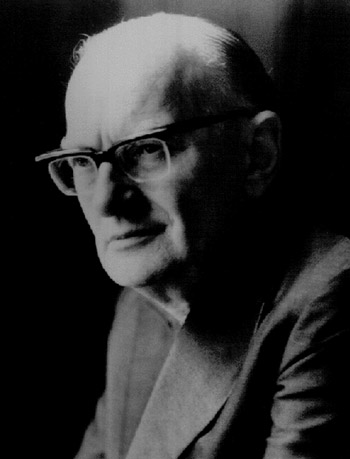
 The idea of using satellites as relay stations for an international microwave radiotelephone system goes back to 1945 when Arthur C. Clarke (refer to Figure S-1) proposed the scheme in a British technical journal. Clarke, then a young scientist and officer of the Royal Air Force, later became a leading science fiction writer and co-author of the motion picture 2001: A Space Odyssey. The first satellite, however, was not put into orbit until 1957. Although only a beacon whose primary purpose was to announce its presence in the sky, the Russian satellite Sputnik had a successful orbital deployment that sparked a technological revolution in communications that has continued to this day. Currently, there are 2,559 satellites in orbit, along with over 6,000 pieces of debris that are tracked by the National Aeronautics and Space Administration (NASA).
The first communications satellites, Echo 1 and Echo 2, were launched by the United States in the early 1960s. They were little more than metallic balloons that simply reflected microwave signals from point A to point B. Although highly reliable, these passive satellites could not amplify the signals. Reception was often poor, and the range of transmission was limited. Ground stations had to track them across the sky, and communication between two ground stations was only possible for a few hours a day when both had visibility with the satellite at the same time.