Probably no single issue causes as much disruption to an excavation project as does the presence of water. It can destabilize bearing surfaces, cause havoc with cut slopes, restrict the contractors choices when it comes to shoring, and cost time and money in efforts to deal with it.
Even when handled effectively, it is the primary cause of site access problems. The mud that is inevitable can turn one's neighbors into one's enemies, and can disrupt even the most meticulous of schedules. When not dealt with properly, it can have disastrous effects on all parties to the contract (see Figure 12.1).
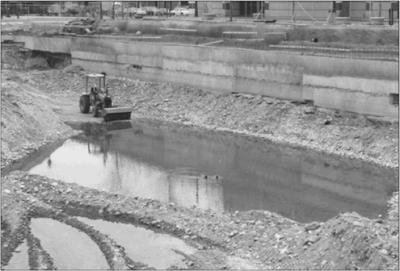 Figure 12.1: Unwatering not well performed, Boise, ID. Note the ducks in the foreground. (Courtesy of Condon-Johnson & Associates, Inc. Seattle, WA)
 When dealing with water problems on site, one must be prepared to deal with surface water, perched water, water tabled within the depth of the excavation as well as water pressures and aquifers below the depth of the excavation. In order to do so, a clear understanding of the types of water conditions to be encountered is necessary. This information must be combined with an evaluation of the potential effects of climatic events and seasonal variations. Only when this clear and rational picture of the issues is in place is it possible to properly design a water control plan which is essential to the successful excavation project.
12.1 UNWATERING
Unwatering is the term used to describe the process whereby water is removed from an excavation after...
Copyright The McGraw-Hill Companies, Inc. 2002 under license agreement with Books24x7


 TABLE OF CONTENTS