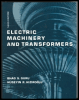
Electric Machinery and Transformers, Third Edition
Chapter 1: Review of Electric Circuit Theory

1.1 Introduction

Without any reservation or exaggeration, we can say that the availability of energy in the electric form has made our lives much more comfortable than ever before in the history of mankind. In fact, we may find it very difficult if not impossible to function if some of the devices that operate on electricity are suddenly taken away from us. Ironically, most of the energy available in the electric form is converted directly or indirectly from some other form of energy. An example of the direct energy conversion process is the conversion of light energy into electric energy by solar cells.

In the indirect energy-conversion process, we may use such resources as oil, natural gas, and coal. By burning these fuels we generate heat, which is then utilized to produce steam in a boiler. The steam propels the blades of a turbine, which in turn rotates the rotor of an electric generator that produces electric power. On the other hand, the potential energy of water is converted into mechanical energy by a turbine in a hydroelectric plant. Therefore, what matters the most in the indirect energy conversion process is the mechanical energy that must be supplied to the rotor of an electric generator. This process may also be referred to as an electromechanical energy conversion process owing to the conversion of mechanical energy into electric energy.

The main objective of this book is to discuss the basic principles of electromechanical energy conversion. Another goal of this...

UNLIMITED FREE
ACCESS
TO THE WORLD'S BEST IDEAS

SUBMIT
Already a GlobalSpec user? Log in.

This is embarrasing...

An error occurred while processing the form. Please try again in a few minutes.

Customize Your GlobalSpec Experience

Category: Energy Product Testing Services
Finish!
Privacy Policy

This is embarrasing...

An error occurred while processing the form. Please try again in a few minutes.