Electric Machinery and Transformers, Third Edition
Chapter 8: Synchronous Motors

8.1 Introduction

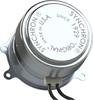
A synchronous motor, as the name suggests, runs under steady-state conditions at a fixed speed called the synchronous speed. The synchronous speed, as discussed in the preceding chapter, depends only upon (a) the frequency of the applied voltage and (b) the number of poles in the machine. In other words, the speed of a synchronous motor is independent of the load as long as the load is within the capability of the motor. If the load torque exceeds the maximum torque that can be developed by the motor, the motor simply comes to rest and the average torque developed by it is zero. For this reason, a synchronous motor is not inherently self-starting. Therefore, it must be brought up almost to its synchronous speed by some auxiliary means before it can be synchronized to the supply.

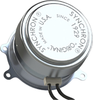
Because of its constant speed-torque characteristic, a small synchronous motor is used as a timing device. A large synchronous motor may be used not only to drive a certain load but also to improve the overall power factor (pf) of an industrial plant because it can be operated at a leading power factor. However, when a synchronous motor is operated at a leading power factor. However, when a synchronous motor is operated at no load just to improve the power factor, it is usually referred to as a synchronous condenser.

A synchronous motor can be either a single-phase or a polyphase motor. Only three-phase synchronous motors are discussed in this...

UNLIMITED FREE
ACCESS
TO THE WORLD'S BEST IDEAS

SUBMIT
Already a GlobalSpec user? Log in.

This is embarrasing...

An error occurred while processing the form. Please try again in a few minutes.

Customize Your GlobalSpec Experience

Category: AC Motors
Finish!
Privacy Policy

This is embarrasing...

An error occurred while processing the form. Please try again in a few minutes.