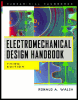
Electromechanical Design Handbook, Third Edition
This chapter of the handbook provides data and design procedures for the electrical and electronic aspects of electromechanical design practices. Industrial product designers and developers are required to perform all aspects of the design of a product in many small- and medium-sized companies today. A product designer who is knowledgeable in all the disciplines of electromechanical design practices is an asset to any company or organization.
Specialists in the various engineering disciplines are required to assist the electromechanical design engineers in formulating specific, specialized engineering functions and data for use by the electromechanical designer.
Electromechanical design practices include the integration of mechanical, electrical, and electronic engineering principles in the design of a consumer or industrial product. Electromechanical design engineering practices have been used in the United States since the birth of electrical power usage more than 100 years ago. Since it is, in general, extremely difficult to separate electrical and electronic design practices for all applications, the term mechatronics should not be used to indicate the electromechanical design function. It must be understood that electrical components are always used in electronic systems, which also include purely electronic components. The integrated circuit itself, strictly speaking, is an electromechanical system component and is also considered an electronic component.
This section of the handbook will therefore be very useful to those individuals trained or currently being trained in the electromechanical disciplines or who use these principles on a daily or occasional basis.