Common electrical parameters that require calibration equipment include voltage, current, resistance, and capacitance. Equipment is needed to measure the outputs of transducers and signal conditioners and to simulate the inputs to displays, data acquisition systems, and signal conditioners.
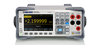
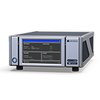
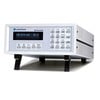
Bench-mounted digital multimeters with resolutions ranging from five and one-half digits to eight and one-half digits will provide the accuracy necessary to calibrate most transducer-based measurement systems. These meters will typically be able to measure AC and DC voltage, AC and DC current as well as resistance, frequency, and period.
Input simulation can be performed with power supplies, current sources, resistance and capacitance boxes, and frequency or signal generators. Multi-function calibrators are also available to generate and measure electrical parameters. These calibrators and the multimeters can often be computer controlled to produce automatic calibration systems that can follow a prepared calibration procedure with and without operator input.
12.1 Voltage
DC voltage is the most common electrical parameter measured during the calibration of transducer-based measurement systems. The outputs of most signal conditioners and the output of many transducers is a DC voltage signal. The voltage can range from microvolt-level thermocouple signals to the 10-volt signals common to signal conditioners.
Five and one-half to eight and one-half digit multimeters will usually have a very accurate DC voltage specification since the DC voltage measurement forms the basis of most of the other parameters such as current, resistance, and AC voltage.
The specifications of the chosen multimeter should be carefully examined to ensure that it has...
Copyright ISA—Instrumentation, Systems, and Automation Society 2006 under license agreement with Books24x7


 TABLE OF CONTENTS