The Range Of Possibilities By 2015
Impossible though it is to predict the future, technology trends give some indication of what we might anticipate based on current movements and progress. As discussed, the progress and effect of these trends will be modulated by enablers and barriers. Furthermore, these trends could have various effects on the world. Figures 3.1, 3.2, and 3.3 tie these components together for three trends: genetically modified foods, smart materials, and nanotechnology.
Figure 3.1 shows the range of potential paths that genetically modified foods might take by 2015 along with enablers, barriers, and effects. Investments and genome decoding are fueling the ability to modify and engineer organisms to provide needed capabilities, but social concerns are already affecting the generation and use of GM foods, especially between the United States and European Union (particularly in the United Kingdom). In an optimistic 2015, GM foods will be widespread, resulting in significant benefits for food quality, global production, and the environment (e.g., represented by the Biotechnology Industry Organization s positions (BIO, 2000 [41]). Policy controls or lack of investments might moderate the production and use of GM foods, leading to increased reliance on traditional mechanisms for food productivity increases and pest control.
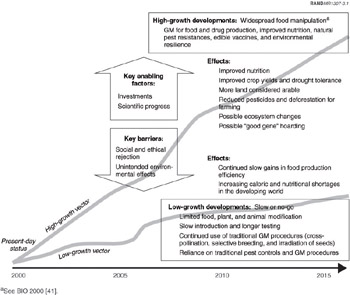 Figure 3.1: Range of Possible Future Developments and Effects from Genetically Modified Foods
 Figure 3.2 shows the range of potential paths that smart materials might take by 2015 along with enablers, barriers, and effects. Investments and commitment to research are prime enablers, but limited funding, limited labor, failing...


 TABLE OF CONTENTS