1-1 Sheet-Metal Stamping in Comparison with Other Metal Fabricating Processes
In today's practical and cost-conscious world, sheet-metal parts have already replaced many expensive cast, forged, and machined products.
The reason is obviously the relative cheapness of stamped, or otherwise mass-produced parts, as well as greater control of their technical and aesthetic parameters. That the world slowly turned away from heavy, ornate, and complicated shapes, and replaced them with functional, simple, and logical forms only enhanced this tendency. Remember old bathtubs? They used to be cast and had ornamental legs. Today they are mostly made of coated sheet metal, if not plastics. Manufacturing methods for picture frames, chandeliers, door and wall hardware, kitchen sinks, pots and pans, window frames, and doors were gradually replaced by more practical and less costly techniques.
But, sheet-metal stampings can also be used to imitate handmade ornamental designs of previous centuries. Such three-dimensional decorations can be stamped in a fraction of time the repouss artist of yesterday needed.
Metal extrusions, stampings, and forgings, frequently quite complex and elaborate, are used to replace handmade architectural elements. Metal tubing, metal spun products, formings, and drawn parts are often but cheaper substitutes of other, more expensive merchandise.
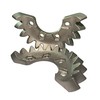
Metal stampings, probably the most versatile products of modern technology, are used to replace parts previously welded together from several components. A well-designed sheet-metal stamping can sometimes eliminate the need for riveting or other fastening processes (Fig. 1-1). Stampings can be used to improve existing designs that often are costly and...


 TABLE OF CONTENTS