Handbook of Nondestructive Evaluation

The ways in which sound waves propagate through materials and are attenuated, reflected, or transmitted dictate the different ultrasonic methods or techniques used to detect the many types of discontinuities that can exist in materials. These techniques fall into two main categories, one called pulse-echo, and the other called through-transmission. Any of the techniques that may be used requires calibration of the ultrasonic system so that the time base can have some meaning in terms of material thickness. This is also true for through-transmission techniques where depth information is not available, since the practitioner needs to be sure that an adequate time base is available to show the transmitted energy.
The process of calibration needs to be just as disciplined as the inspection technique. In fact, the whole inspection relies on the calibration process. Some of the following calibration techniques are concerned with measuring and documenting the characteristics of the transducer and flaw detector.
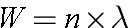
Resolution. The ultrasonic pulse consists of a few cycles of sound energy at the test frequency. Therefore, the pulse occupies some space in time, or distance, within the material. The amount of space occupied is called the pulse width. Physically, it is the number of cycles in the pulse multiplied by the wavelength of that frequency in the test material, or, mathematically:
Where
n = The number of cycles in the pulse
? = Wavelength
Pulse width is important because while one pulse...