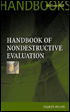
Handbook of Nondestructive Evaluation

Chapter 9: Thermal Infrared Testing

1. HISTORY AND DEVELOPMENT

Humans have always been able to detect infrared radiation. The nerve endings in human skin can respond to temperature differences of as little as 0.0162 F (0.009 C). Although extremely sensitive, nerve endings are poorly designed for thermal nondestructive evaluation. Even if humans had the thermal capabilities of a pit viper, which can find its warm-blooded prey in the dark, it is most probable that better heat detection tools would still be needed. Thus, as inventive beings, we have turned to mechanical and electronic devices to allow us to become hypersensitive to heat. These devices, some of which can produce thermal images, have proved invaluable for thermal inspection in countless applications.

Sir William Herschel, who in 1800 was experimenting with light, is generally credited with the beginnings of thermography. Using a prism to break sunlight into its various colors, he measured the temperature of each color using a very sensitive mercury thermometer. Much to his surprise, the temperature increased when he moved out beyond red light into an area he came to term the dark heat. This is the region of the electromagnetic spectrum referred to as infrared and recognized as the electromagnetic radiation that when absorbed causes a material to increase in temperature.

Twenty years later, Seebeck discovered the thermoelectric effect, which quickly lead to the invention of the thermocouple by Nobili in 1829. This simple contact device is based on the premise that there is an emf (electromotive force) or voltage that occurs when two dissimilar...

UNLIMITED FREE
ACCESS
TO THE WORLD'S BEST IDEAS

SUBMIT
Already a GlobalSpec user? Log in.

This is embarrasing...

An error occurred while processing the form. Please try again in a few minutes.

Customize Your GlobalSpec Experience

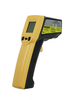
Category: Infrared Thermometers
Finish!
Privacy Policy

This is embarrasing...

An error occurred while processing the form. Please try again in a few minutes.