Hydrodynamics of High-Speed Marine Vehicles
Containing many illustrations, examples and exercises, this book covers all aspects of marine hydrodynamics and all types of high-speed marine vehicles.
 TABLE OF CONTENTS
 Baird (1998) defines a high-speed vessel as a craft with maximum operating speed higher than 30 knots, whereas hydrodynamicists tend to use a Froude number 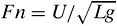 larger than about 0.4 to characterize a fast vessel supported by the submerged hull, such as monohulls and catamarans. Here, U is the ship speed, L is the overall submerged length L OS of the ship, and g is acceleration of gravity. The pressure carrying the vessel can be divided into hydrostatic and hydrodynamic pressure. The hydrostatic pressure gives the buoyancy force, which is proportional to the submerged volume (displacement) of the ship. The hydrodynamic pressure depends on the flow around the hull and is approximately proportional to the square of the ship speed. Roughly speaking, the buoyancy force dominates relative to the hydrodynamic force effect when Fn is less than approximately 0.4. Submerged hull supported vessels with maximum operating speed in this Froude number range are called displacement vessels. When Fn > 1.0 1.2, the hydrodynamic force mainly carries the weight, and we call this a planing vessel. Vessels operating with maximum speed in the range 0.4 0.5 < Fn < 1.0 1.2 are called semi-displacement vessels. This means that high-speed submerged hull supported vessels denote vessels in which the buoyancy force is not dominant at the maximum operating speed.
Ship speeds of about 50 knots represent an important barrier for a high-speed vessel. At this speed, cavitation typically starts to be a problem, for instance, on the...