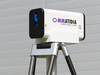
GPS has found its way into many applications, mainly as a result of its accuracy, global availability, and cost-effectiveness. Unfortunately, there exist some situations in which part of the GPS signal may be obstructed to the extent that the GPS receiver may not "see" enough satellites for positioning. Examples of these situations are positioning in urban canyons and deep open-pit mining. This signal-obstruction problem is successfully overcome by integrating GPS with other complementary systems. Integration of GPS and other complementary systems is also beneficial in the cases of significant attenuation. This chapter introduces the most common integrated systems, namely GPS/Loran, GPS/laser range finder, GPS/dead reckoning, GPS/inertial navigation system, GPS/pseudolite, and GPS/cellular system.
9.1 GPS/Loran-C Integration
Loran is a terrestrial radio-navigation system, which provides positioning and timing services for users within its coverage area [1, 2]. Loran is an acronym for long-range navigation. The first generation, known as Loran-A, was developed in early 1940s. Its successor, Loran-C, provides longer range and greater accuracy [3]. A Loran-C system consists of ground transmitting stations separated by hundreds of kilometers, which are organized into chains. Typically, a Loran chain encompasses a master station and two or more (up to five) secondary stations [4]. A minimum of two secondary stations is required to obtain a position fix in the normal mode of operation (see Figure 9.1). However, a user with a precise clock can obtain a position fix with two stations only. Such a positioning mode is known as the Rho-Rho mode. Secondary stations are...
Copyright Artech House, Inc. 2006 under license agreement with Books24x7

 TABLE OF CONTENTS