Introduction to Plastics Recycling, Second edition

6.4: Blow Moulding

6.4 Blow Moulding

Blow moulding is the third most commercially important process for plastics production after extrusion and injection moulding. It is used to produce a range of hollow articles, for example, bottles, fuel tanks and other large containers. There are two main variations, injection blow moulding and extrusion blow moulding. The process sequence for both is the same.

  • The material is either extruded or injected to produce a tube like preform.

  • The preform is blown out to the shape of the mould and then cooled.

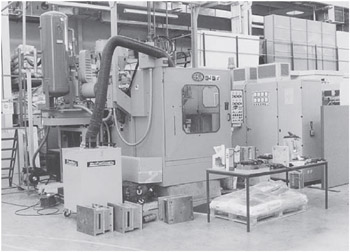
Injection blow moulding is most commonly employed for the production of transparent soft drinks containers. However, extrusion blow moulding is the method most commonly employed for mouldings such as shampoo and detergent containers, plastic drums and milk bottles. An extrusion blow moulding machine is shown in Figure 6.11.


Figure 6.11: Blow moulding machines

6.4.1 Extrusion Blow Moulding

The material is fed through a transfer screw into a die head, where the material is melted and passes out through a die as a tube-like extrudate termed a parison. This is illustrated in Figure 6.12. This process can be either continuous or, with larger articles, intermittent.


Figure 6.12: Extrusion blow moulding. Step 1: Parison formation

The parison extrudes down vertically and the process relies on the hot strength of the plastic to hold the parison weight in shape. For this reason blow moulding uses far more viscous materials than would normally be employed for the injection moulding process. A low viscosity material would simply...

UNLIMITED FREE
ACCESS
TO THE WORLD'S BEST IDEAS

SUBMIT
Already a GlobalSpec user? Log in.

This is embarrasing...

An error occurred while processing the form. Please try again in a few minutes.

Customize Your GlobalSpec Experience

Category: Molding Machines
Finish!
Privacy Policy

This is embarrasing...

An error occurred while processing the form. Please try again in a few minutes.