Mathematica Demystified

Simple enough for a beginner, but challenging enough for an advanced user, this hands-on guide takes you from your very first calculation all the way to plotting complex fractals in Mathematica.
 TABLE OF CONTENTS
 Given a function f (x) its derivative can be defined as the limit
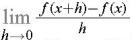
The derivative can be interpreted as the instantaneous rate of change of f (x). Geometrically, the derivative gives the slope of the line tangent to the graph of f (x). Of course, as we have seen in the first part of this chapter, limits do not always exist, so sometimes a function may not be differentiable, that is to say, have a derivative. Of course, all "nice" functions are differentiable. In particular, all polynomials are, the exponential and logarithmic functions are and so are all the trigonometric functions. If we then start combining differentiable functions by adding, subtracting, multiplying, dividing, or composing we will produce differentiable functions, with some exceptions occurring if we try to do unacceptable things like divide by zero.
We can take the derivative of a function in Mathematica by using the derivative function D. For example, suppose that f (x) is the polynomial f (x) = x 4 ? x 3 + 2 x + 1. The D function takes two arguments. The first is the function we want to differentiate and the second is the variable with respect to which we want to differentiate. Example 7.4.1 illustrates this.
In[48]:=(* differentiating a polynomial *) <b class="bold">D[x^4-x^3+2x+1, x]</b>Out[48]= 2 - 3x<sup2</sup> + 4x<sup3</sup>
Of course, differentiating polynomials is pretty...