4.3 GENERAL BIQUAD CIRCUIT USING A SINGLE OP AMP
One circuit that may be used to realize a general biquadratic transfer function, and of course can be used to realize special-case low-pass, high-pass, band-pass, and band-reject functions, is shown in Fig. 4-20. This circuit is strikingly similar to the positive feedback/negative feedback circuit of Delyiannis, shown in Fig. 4-17. The circuit has, in essence, two feedforward paths added to synthesize the zeros [P6]. Henceforth, we shall refer to these circuits as the Delyiannis-Friend (DF) circuits. The configuration in Fig. 4-20 is designed for and is highly suited to thin-film, hybrid integrated-circuit fabrication. In the literature this circuit is either referred to as the single amplifier biquad (SAB) or as the standard tantalum active resonator (STAR). It is currently being used extensively in the Bell Telephone System for audio- and voice-frequency signal-processing applications.
 Figure 4-20: Friend general biquad circuit.
 The transfer function of this circuit, assuming an infinite-gain op amp, is given by
| (4-63) | 
|
The coefficients of Eq. (4-63) are related to the circuit element values, for GB = ?, according to the following relations:
| (4-64a) | 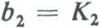
|
| (4-64b) | 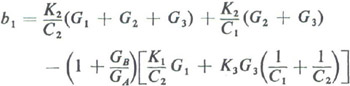
|
| (4-64c) | 
|
| (4-64d) | 
|
| (4-64e) | 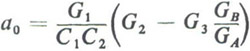
|
where
| (4-65) | 
|
It is noted that there are nine variables ( C 1, C 2, R 1, R 2, R 3, K 1, K 2, K 3, R A/R B) and only five specifiable coefficients in Eq. (4-63). Therefore, four of these variables and either R A or


 TABLE OF CONTENTS