TRACTOR-MOUNTED RIPPER
A ripper is a tooth, or set of teeth, which is usually mounted in a frame hinged to the back of a crawler tractor, with hydraulic hoist. It is pulled through rock or hard soil to break and loosen it.
The mounting may be a radial type, in which the teeth move in an arc, so that they tend to point downward in carrying position, and swing forward as they are lowered. A parallelogram or double mounting has two pairs of hinge arms, upper and lower, that keep the shank(s) at a constant angle to the ground as it is raised or lowered. See Figs. 21.1 and 21.2.
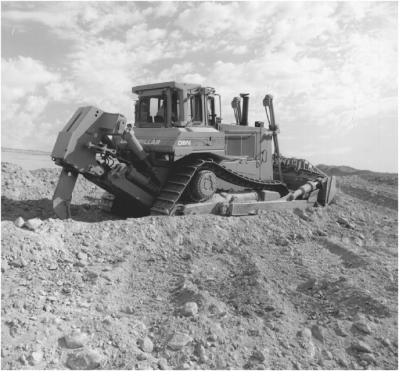 FIGURE 21.1: Ripper with parallelogram mounting. ( Reprinted courtesy of Caterpillar Inc.)
 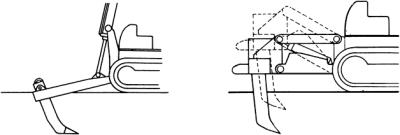 FIGURE 21.2: Radial and parallel mountings.
 In an adjustable parallelogram, the upper arms are replaced by a pair of hydraulic cylinders which can be used to regulate shank angle, either before or during ripping.
Adjustment is useful in selecting an efficient point angle for a particular formation. It allows using a steep angle for entry, and a flatter, point-saving one for ripping. Dull points may sometimes be sharpened during ripping by changing from a steeper to a flatter angle.
The hydraulic pump and controls are built into the tractor, which should carry a bulldozer. This should have hydraulic tilt, for efficiency in handling oversize pieces of rock.
Shanks and Teeth. A tooth is made up of a long shank and the tooth proper,...


 TABLE OF CONTENTS