Moving the Earth: The Workbook of Excavation, Fifth Edition
Crawler (track-laying) tractors have a weight range from 4 or 5 tons to almost 150 tons. Maximum horsepower is over 1,000.
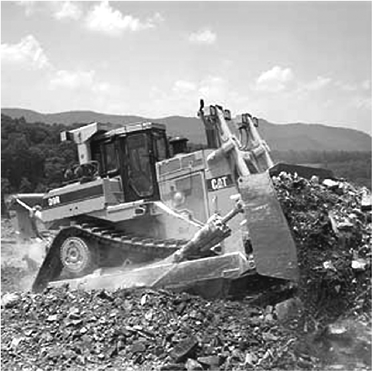
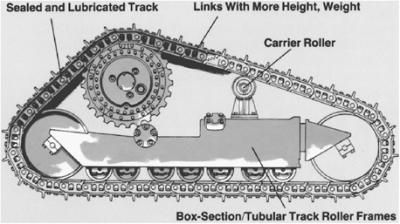
Figure 15.1A shows a typical direct-drive crawler tractor. The detail view (Fig. 15.1B) shows a center section or chassis that contains the engine, transmission, and steering units; and two track frames that supply traction and support. The Caterpillar tractors started the bull wheel sprocket above and slightly ahead of the rear track idler wheel, as seen in Fig. 15.2, to keep out of the dirt and environment, for better servicing and durability, and to improve balance and stability.
Engine. The engine is usually diesel, although in the smaller sizes, it may be gasoline-fueled. Power is rated first as net engine horsepower, meaning the net horsepower at the flywheel with the engine driving all accessories normal to tractor operation.
The second standard of measurement is drawbar pull or horsepower. This is a figure smaller than the flywheel horsepower and represents usable power at the drawbar under certain set conditions, after deducting losses in friction and slippage. This is the usual rating for tractors with direct mechanical drive.
Power may also be measured in terms of pounds of drawbar pull, a factor that...