Solving any diagnostic problem requires the right tools and the ability to use them. Like doctors trying to solve a health problem, power quality engineers and technicians need meters and other measurement tools to solve electrical facility health problems. The first step in solving a power quality problem is to determine the cause of the problem. Making either visual inspections or electrical measurements of the electrical distribution system can do this. Chapter 7, Power Quality Surveys, shows how to make visual inspections of a facility s electrical distribution system. This chapter, Power Quality Measurement Tools, explains how to perform and analyze power quality measurements using power quality measurement tools.
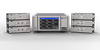
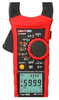
As shown in Figure 6.1, there are a myriad of power quality measurement tools available today. They include instruments that measure and display the basic electrical parameters of voltage, current, frequency, and impedance of an electrical distribution system. These tools include ammeters, voltmeters, multimeters, oscilloscopes, flicker meters, electrostatic voltmeters, infrared detectors, radio-frequency interference and electromagnetic interference meters, harmonic and spectrum analyzers, power quality monitors, and various types of wiring and grounding testers. These instruments measure, display, and store electrical parameters for the purpose of helping solve power quality problems. In addition to these electrical measurement tools, there are devices, such as video cameras and audiotape recorders, for recording the effects of power quality problems. With all these choices, power quality experts as well as novices must know how to choose and use the right instrument. How to choose the right tool...
Copyright The McGraw-Hill Companies, Inc. 2000 under license agreement with Books24x7


 TABLE OF CONTENTS