Supportability Engineering Handbook: Implementation, Measurement, and Management
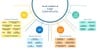
Supportability must be assessed and tested throughout the life of a system to ensure that all requirements are being met. Assessment and testing are a continual process rather than just a one-time event at some point during the life of a system. There are many areas that should be subjected to some type of evaluation, assessment, or formal testing, but in order to do this, clear, tangible requirements must be placed on the program and the system. The four major areas that have been presented in this book and shown in Figure 13-1 are the supportability engineering process of the buyer and seller, the supportability characteristics of the design, the physical support resources for the system, and the adequacy and responsiveness of the support infrastructure where the system will be placed. Each of these areas has specific things that should and must be assessed.
Supportability engineering process
Supportability characteristics of the design
Support resources
Support infrastructure
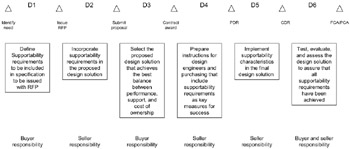
The preceding chapters of this book have described a process that is proven to integrate supportability into the design of a system by participating in the critical decision-making events throughout system development. Each of these supportability engineering activities must be assessed to ensure that all possible benefits can be realized through the process. The overall process, restated in Figure 13-2, shows not only what should be done when but also what should be assessed.
The...