Supportability Engineering Handbook: Implementation, Measurement, and Management

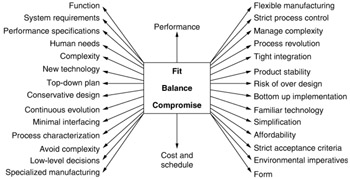
Supportability engineering is a key participant on the systems engineering team on any program. This means that managing supportability engineering consists of effective integration of activities with all others being performed at the same time. It also means that getting results from supportability engineering depends on the coordination and negotiation of supportability issues with the issues from every other engineering discipline participating in the program. Figure 15-1 illustrates this complex series of issues. There is no best solution, only the solution that gives the most reasonable balance among operational effectiveness, operational availability, and cost of ownership. Successful implementation of supportability engineering requires proper interfacing with all other disciplines, performing activities in concert with the program schedule, making sure that the work is completely identified and quantified, and finally, establishing and following well-orchestrated management and implementation plans.
Typically, the systems engineering team has representation from every discipline required to produce the system. The team membership varies based on the technology of the system being designed but normally has the disciplines listed at Figure 15-2. Each discipline has its own concept as to what the ultimate design characteristics should be to meet the ultimate best results. However, each discipline's ideas are different from those of other members of the team. For example, reliability engineering strives for a design that will not fail, but maintainability engineering assumes that it will fail, so it looks to repair it quickly. While the disciplines of reliability and...