Universal Joints and Driveshafts: Analysis, Design, Applications

The earliest information about joints came from Philon of Byzantium around 230 BC in his description of censers and inkpots with articulated suspension. In 1245 AD the French church architect, Villard de Honnecourt, sketched a small, spherical oven which was suspended on circular rings. Around 1500, Leonardo da Vinci drew a compass and a pail which were mounted in rings [1.1].
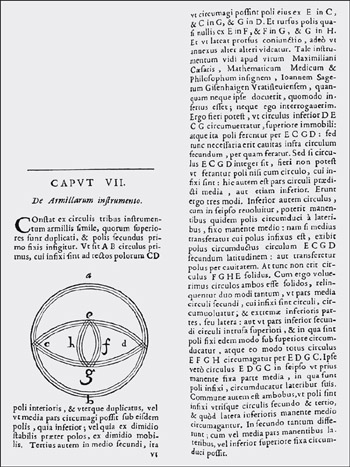
Swiveling gimbals were generally known in Europe through the report of the mathematician, doctor and philosopher, Geronimo Cardano. He also worked in the field of engineering and in 1550 he mentioned in his book "De subtilitate libri XXI" a sedan chair of Emperor Charles V "which was mounted in a gimbal" [1.2]. In 1557 he described a ring joint in "De armillarum instrumento". Pivots staggered by 90 connected the three rings to one another giving rise to three degrees of freedom (Fig. 1.1). This suspension and the joint formed from it were named the "cardan suspension" or the "cardan joint" after the author.