Water Treatment Plant Design, Fourth Edition

Brian E.Peck
South Orange County Wastewater Authority
Dana Point, California
Jerry S.Russell
Carollo Engineers, PC
Phoenix, Arizona
Regulatory changes have caused dramatic changes in the handling of residuals from water treatment plants since the early 1970s. The Clean Water Act placed limitations on the ability of drinking water treatment plants to discharge residuals to sanitary sewers or natural waterways. This placed a greater emphasis on the on-site handling of process wastes. Changing regulations with regard to constituents such as arsenic have also impacted the range of opportunities for the ultimate disposal of residuals. Over the past decade, growing concerns about the level of protozoa in drinking water have spurred further changes to the handling of backwash waste and the recycling of waste streams within treatment plants.
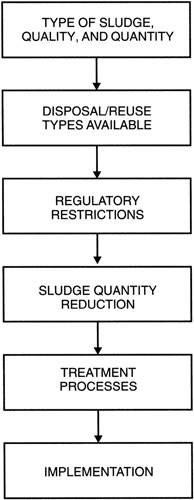
The impact of regulations has complicated the design process for residuals handling systems. The design process now involves a balancing of the options for disposal treatment. The general steps in designing residuals handling, recovery, and disposal are as follows:
Determine the types, characteristics, quality, and quantity of waste flows.
Evaluate treatment and disposal options that are available.
Review the regulations and restrictions affecting each disposal method.
Review treatment changes that could reduce the quantities of wastes, including economies and advantages of recycling some of the wastes.
Review the economics, advantages, and disadvantages of all alternatives.
Select the best treatment or disposal alternatives.
The flow of these design steps is illustrated in Figure 17.1.