Help with Electronic Development Boards specifications:
General Specifications
Back to Top

|
| ||
| Category | |||
| Your choices are... | |||
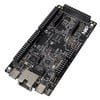
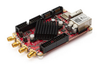
| Development Board | Development boards refer to a sole board that can be used to develop systems on many different kinds of electronics devices. | ||
| Development Suite / Kit | Development suites/ kits are assemblies of hardware and software that may include a development board, software, components, and interfaces for developing and evaluating electronics components. | ||
| Development Software | Development software packages are used for electronic prototype and development. Normally these are suite packets that my include compilers, assemblers, debuggers, emulators, etc. | ||
| Other | Other unlisted categories | ||
| Search Logic: | All products with ANY of the selected attributes will be returned as matches. Leaving all boxes unchecked will not limit the search criteria for this question; products with all attribute options will be returned as matches. | ||
| |||
| Function | |||
| Your choices are... | |||
| Break Out Board | Breakout boards are used for enlarging connections for testing and evaluating small surface mount components. | ||
| Circuit Emulator | Circuit emulator boards emulate various circuits typically used to evaluate microcontroller programming. | ||
| Debugger / Debug Probe | Debuggers are hardware devices that connect to a computer or a developing board to detect programming errors. | ||
| Other | Other unlisted development tools. | ||
| Search Logic: | All products with ANY of the selected attributes will be returned as matches. Leaving all boxes unchecked will not limit the search criteria for this question; products with all attribute options will be returned as matches. | ||
| |||
| Signal Type | |||
| Your choices are... | |||
| Analog | The unit has analog inputs or outputs. | ||
| Digital | The unit has digital inputs or outputs. | ||
| Search Logic: | All products with ANY of the selected attributes will be returned as matches. Leaving all boxes unchecked will not limit the search criteria for this question; products with all attribute options will be returned as matches. | ||
| |||
| Bus Width | |||
| Your choices are... | |||
| 8-Bit | Development tools are compatible with an 8-bit data bus. | ||
| 16-Bit | Development tools are compatible with a 16-bit data bus. | ||
| 24-Bit | Development tools are compatible with a 24-bit data bus. | ||
| 32-Bit | Development tools are compatible with a 32-bit data bus. | ||
| 64-Bit | Development tools are compatible with a 64-bit data bus. | ||
| 128-Bit | Development tools are compatible with a 128-bit data bus. | ||
| 256-Bit | Development tools are compatible with a 256-bit data bus. | ||
| Other | Other unlisted bus width. | ||
| Search Logic: | All products with ANY of the selected attributes will be returned as matches. Leaving all boxes unchecked will not limit the search criteria for this question; products with all attribute options will be returned as matches. | ||
| |||
Device Compatibility
Back to Top
|
|
| ||
| Supported System | |||
| Your choices are... | |||
| ASIC | The device is supported by an application specific integrated circuit (ASIC). This type of integrated circuit is customized for a particular use, rather than general-purpose applications. | ||
| Communications/Networking | Network communications chips are used to split, switch, boost, or direct packets of information along a network. | ||
| CPU | Central processing unit (CPU) chips are used in digital computers and are the semiconductor component where most calculations take place. | ||
| DSP | Digital signal processors (DSP) are special microprocessors designed for digital signal processing, usually in real-time. | ||
| FPGA | Field programmable gate array (FPGA) circuits are designed to be configured by the customer after manufacturing. They can be used similar to ASICs, and can be used to implement any logical function that an ASIC could perform. | ||
| GPS | The device is used to develop circuits and systems for global positioning systems (GPS) devices. | ||
| Microcontroller | Microcontrollers (MCU) are complete computer systems on a chip. They combine an arithmetic logic unit (ALU), memory, timers and counters, serial port, input/output (I/O) ports, and a clock | ||
| Multimedia | The device is used to develop circuits and systems for multimedia devices. | ||
| PLD Development | The device is used to develop circuits and systems for programmable logic devices (PLDs). | ||
| Power | Chips or devices for controlling or modifying power include switching power supplies, inverters, dc-dc converters, and other power-related devices. | ||
| PSoC | Programmable system-on-chip (PSoC) is an IC arrays, developed by Cypress Semiconductors, that contain analog and digital interfaces. They are used for the design of IP cores or whole systems. | ||
| RF | Radio frequency (RF) chips and used to amplify, modulate, decode, or other in other ways process, receive or generate RF signals. | ||
| Sensors | Sensor devices are used for measuring pressure, temperature, speed, vibration, or other types of sensory input. | ||
| SoC | The device is used to develop circuits and systems for system-on-chip devices. | ||
| Video/Audio | Video and audio processors IC are semiconductor devices used to process video and audio from a diverse range of activities. | ||
| VoIP | The device is used to develop circuits and systems for voice-over-IP (VoIP) devices. | ||
| Wireless Systems | The development tool is used to design, develop, or test wireless devices. | ||
| Other | Other unlisted applications. | ||
| Search Logic: | All products with ANY of the selected attributes will be returned as matches. Leaving all boxes unchecked will not limit the search criteria for this question; products with all attribute options will be returned as matches. | ||
| |||
| Manufacturer | |||
| Your choices are... | |||
| ACTEL | ACTEL is a manufacturer of FPGA devices and CPUs. | ||
| Altera | Altera is a manufacturer of FPGA's. | ||
| AMD® | Advanced Micro Devices (AMD®) | ||
| ARM | ARM architecture is a reduced instruction set for the risk architecture. | ||
| Atmel | Atmel is a manufacturer of microcontrollers. | ||
| Freescale | Freescale Semiconductor Inc. | ||
| Hitachi | Hitachi is a manufacturer of semiconductors. | ||
| IBM | International Business Machines | ||
| Intel® | Intel® provides CPU's and microprocessors | ||
| Microchip (PIC®) | Microchip provides the peripheral interface controller (PIC®), a versatile microcontroller. | ||
| NEC | NEC Corporation | ||
| Texas Instruments | Texas Instrument is a manufacturer of semiconductors. | ||
| Xilinx | Xilinx supplies FPGA's | ||
| Zilog | Zilog, inc. manufacturers’ microprocessors. | ||
| Other | Other unlisted manufacturers. | ||
| Search Logic: | All products with ANY of the selected attributes will be returned as matches. Leaving all boxes unchecked will not limit the search criteria for this question; products with all attribute options will be returned as matches. | ||
| |||
Interfaces
Back to Top
|
|
| ||
| Host Interface | A bus is a pathway that is used to transfer data within a computer. This pathway can be established between two or more computer components. There are many types of buses: processor bus, memory bus, AGP bus, etc. The I/O Bus (also known as expansion slots) enables the CPU to communicate with peripheral devices. One important parameter used to measure the performance of a bus is the number of bits at which the bus operates. This is the number of paths (wires) that the bus uses to send data simultaneously. For instance, a 16-bit bus is capable of sending 16 bits of data simultaneously. | ||
| Your choices are... | |||
| CompactPCI | CompactPCI is a high-performance industrial bus that uses the electrical standards of the PCI bus packaged in a Eurocard. The specifications of the CompactPCI bus were developed and maintained by the PCI Industrial Computers Manufacturers Group (PCIMG). It is used extensively in systems that require high speed transfer of data, such as data communication routers and switches, real-time machine control, real-time data acquisition, military systems, etc | ||
| ISA / EISA | Industry standard architecture (ISA) is a standard for I/O buses that was set back in 1984 when IBM was the standard. The ISA bus can handle 16-bit data transfers at a clock speed of 8 MHz. It is also capable of handling memory under 16 MB. Extended ISA (EISA) is an improvement over the ISA bus. It runs at 8 MHz, is capable of 32-bit data transfer, and can access all memory in the system. | ||
| 32-bit PCI | Peripheral component interconnect (PCI) is a local bus system designed for high-end computer systems, such as the Pentium®. It transfers 32-or-64 bits of data at a clock speed of 33 MHz. The PCI bus supports 3-to-5 critical peripherals, which are either integrated directly onto the motherboard or added via expansion cards. The PCI bus fully supports cards developed for standard I/O buses. | ||
| 64-bit PCI | The PMC bus is actually a form factor, not a bus -- it is electrically the same as the PCI Bus, but the shape of the card and the bus connectors are different. It is designed for rugged implementations as the PMC form factor provides a secure mounting platform for PMC VME mezzanine boards. | ||
| PXI Bus | PCI eXtensions for instrumentation (PXI) are a superset of CompactPCI that adds timing and triggering functions, imposes requirements for documenting environmental tests, and establishes a standard Windows-based software framework. | ||
| PMC Bus | The PMC bus is actually a form factor, not a bus -- it is electrically the same as the PCI bus, but the shape of the card and the bus connectors are different. It is designed for rugged implementations as the PMC form factor provides a secure mounting platform for PMC VME mezzanine boards. | ||
| PCMCIA (PC Card) | PCMCIA devices (PC cards) are credit-card-sized peripherals that are predominantly used in laptop computers. The PCMCIA adapter takes the place of a COM port on a standard bus. The card is plugged into a 68-pin host socket that is connected either to the motherboard or an expansion bus. An adapter then translates the PCMCIA signals into signals usable by the computer's bus. | ||
| PC/104 (PC/104-Plus, EBX, ETX) | PC/104 gets its name from the desktop personal computers (PCs) designed by IBM (PCs) and from the number of pins used to connect the cards together (104). PC/104 cards are much smaller than ISA-bus cards and they stack together, which eliminates the need for a motherboard, back plane, and/or card cage. PC/104-Plus incorporates the PCI bus into the PC/104 form-factor for faster data transfer. EBX (embedded board eXpandable) defines a 5.75" x 8" form factor large enough to implement a powerful single-board computer. It supports PC/104 expansion. ETX (embedded technology eXtended) is a form factor for developing an embedded system. It allows for easier design by eliminating cables and connectors. The ETX-PC has a small footprint, 114mm x 95mm, and a maximum thickness of 12mm. | ||
| VME Bus | VersaModule Eurocard (VME) is a 32-bit bus used in industrial, commercial, and military applications. VME64 is an expanded version that provides 64-bit data transfer and addressing. | ||
| VXI / VMI Bus | Motorola developed the VME eXtensions for instrumentation with others in the late 1970s. It is a standard for many electronic platforms as it defines electrical and mechanical backplane characteristics. | ||
| Other | Unlisted, specialized, or proprietary configuration. | ||
| Search Logic: | All products with ANY of the selected attributes will be returned as matches. Leaving all boxes unchecked will not limit the search criteria for this question; products with all attribute options will be returned as matches. | ||
| |||
| Ports: | A physical connector that allows a peripheral device such as a printer, a keyboard, or modem, to be attached to the computer. | ||
| Your choices are... | |||
| Ethernet | The device has ehternet ports. | ||
| IEEE 1394 (FireWire®) | A companion to USB, IEEE 1394 is a very high-speed serial bus (400 Megabit - 1 Gigabit). It was designed to replace all external high-speed peripheral connections to personal computers, including hard disks, CD-ROMs, DVDs, graphics cards, high-speed scanners, direct video, monitors, etc. | ||
| Parallel Ports | Parallel ports transmit data by using eight wires simultaneously to send the eight bits that comprise one byte of data. Standard parallel port (SPP) is the most basic port type. Enhanced parallel ports (EPPs) and enhanced capability port (ECPs) are standard signaling methods for bi-directional parallel communication between a computer and peripheral devices that offers the potential for much higher rates of data transfer than the original parallel signaling methods. EPP is for non-printer peripherals. ECP is for printers and scanners. EPP / ECP are part of IEEE Standard 1284, which also specifies support for current signaling methods (including Centronics, the de facto standard for printer communication) so that both old and new peripherals can be accommodated. | ||
| RS232/RS422/RS485 |
Serial ports (asynchronous serial interface) are a system-to-system communication interface. Data is sent over a single wire (serial). Transmission is asynchronous because no synchronization or clocking signal is present. Standards include the following:
| ||
| SCI | Serial Communication Interface (SCI) port. | ||
| SPI | Serial Peripheral Interface (SPI) port. | ||
| USB | Universal serial bus (USB) is a 12-Megabit serial bus designed to replace low-to-medium speed peripheral device connections to personal computers, including keyboards, mice, modems, printers, joysticks, audio functions, monitor controls, etc. | ||
| Wireless | The device utilizes a wireless connection. | ||
| Other | Modem, transmitter, TTL, IR, GPS, etc. | ||
| Search Logic: | All products with ANY of the selected attributes will be returned as matches. Leaving all boxes unchecked will not limit the search criteria for this question; products with all attribute options will be returned as matches. | ||
| |||
Features
Back to Top
|
|
| ||
| Your choices are... | |||
| Analog-to-Digital Converter | The device has an embedded analog-to-digital converter. | ||
| Embedded Power Supply | The devices have an embedded power supply. | ||
| Display Included | The device has a display on it, such as an LCD or LED display. | ||
| In-Circuit Capabilities | |||
| JTAG Pin | Joint test action group (JTAG) products are semiconductor devices that allow access to the inner workings of an IC for testing, controlling, and programming purposes. | ||
| Keyboard Interface | The device has an interface to connect a keyboard. | ||
| Software Included | The device comes with software. | ||
| ZIF Socket | The device has a zero insertion force (ZIF) socket on it. | ||
| Search Logic: | All products with ANY of the selected attributes will be returned as matches. Leaving all boxes unchecked will not limit the search criteria for this question; products with all attribute options will be returned as matches. | ||
| |||