Filtering in the Time and Frequency Domains

This book stands as the most comprehensive treatment of filtering techniques, devices and concepts as well as pertinent mathematical relationships.
 TABLE OF CONTENTS
 | 1. | For the filter below, determine the values of L and C so that
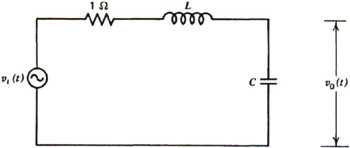 Figure P.3-1 For each case H( j ?) is to be 3 dB down at ? = 1. |
|
| 2. | The transfer function of an all-pass filter (Fig. 3-12 a) is 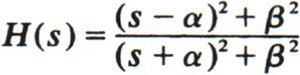 What is the ratio ?/ ? for maximally flat delay at ? = 0? |
|
| 3. | Determine a 1 and a 2 so that f( x) = a 1x + a 2x 2 approximates the function g( x) = |
|
| 4. | For the Butterworth response, what is the order n necessary to obtain A s decibels at ? 3, when the response is 3 dB down at at ? = 1? |
|
| 5. | Consider a Chebyshev filter ( n = 5) normalized for unity ripple-bandwidth. The passband ripple is 0.35 dB.
|
|
| 6. | Consider the third-order Chebyshev filter (0.1-dB passband ripple). What is the attenuation at twice the 3-dB frequency? |
|
| 7. | Use the recursion formula to determine the fifth-order Bessel filter transfer function normalized for unit delay and... |