Filtering in the Time and Frequency Domains

This book stands as the most comprehensive treatment of filtering techniques, devices and concepts as well as pertinent mathematical relationships.
 TABLE OF CONTENTS
 The rise time and noise bandwidth are frequently important in the design and analysis of electronic systems. Their values depend on the system magnitude and phase characteristics, which are largely determined by the filter characteristics. Consequently the filter rise time and noise bandwidth are of considerable interest in practice. Unfortunately there are several definitions of each term and this has caused some confusion, which the following discussions should eliminate.
The rise time t r has traditionally been defined as the time necessary for the step response to go from 10 to 90% of its final value; this is the definition most widely used in practice. Comparison of step responses by this rise time definition can be misleading because two very different responses can have the same rise time (Fig. 3-38 a), whereas two very similar responses can have very different rise times (Fig. 3-38 b). This fact seldom causes appreciable problems in practice, since the additional specification of overshoot or settling time usually determines the acceptable response.
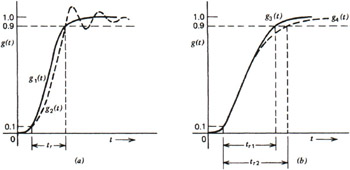
Figure 3-39 plots the rise times of the Butterworth, Gaussian, and Bessel filters using the 10 to 90% definition with ? 3dB = 1. The ordinate is labeled ? ct r, where ? c is the actual LP filter cutoff frequency. We discuss...