
Block and Bleed Valves Hydraulic Valves
Description
Block and bleed valves are specialized hydraulic valves designed to provide isolation and venting capabilities. They consist of two in-line isolation valves and a bleed valve, which is used to drain or vent trapped fluid between the two closure elements. This configuration ensures that the system can be safely isolated and depressurized for maintenance or inspection purposes.
Working Principle
The working principle of block and bleed valves involves the use of two seals with a bleed valve positioned between them. This setup allows operators to monitor and control pressure buildup between the seals, ensuring that any trapped fluid can be safely vented. The double block and bleed configuration is particularly useful for enhancing safety in high-risk environments, as it provides an additional layer of protection by ensuring that the isolation is complete and any potential leaks can be detected and managed effectively.
Applications
Block and bleed valves are commonly used in the oil and gas industry, particularly in offshore locations where space and weight constraints are critical. They are also employed in chemical processing plants and other industrial settings where safety and reliability are paramount. For example, in high-risk pipelines, these valves are used to protect gas, oil, or chemical pipelines by providing a dual seal configuration that enhances operational safety.
Advantages over other Hydraulic Valves
One of the primary advantages of block and bleed valves over other hydraulic valves is their ability to provide complete isolation and venting capabilities, which is crucial for safety in high-risk environments. This feature makes them particularly suitable for applications where safety is a top priority, such as in the oil and gas industry. Additionally, their compact design helps save space and reduce weight, which is beneficial in offshore installations where these factors are critical.
Limitations
Block and bleed valves can be more expensive initially compared to standard valves due to their complex design and additional components. They may also require more maintenance to ensure that all seals and components are functioning correctly, which can increase operating expenses over time.
Considerations
When selecting block and bleed valves, it is important to consider the initial costs, which may be higher due to their specialized design. However, these costs can be offset by the reduced installation and maintenance expenses in the long run. Durability and accuracy are also key considerations, as these valves must reliably perform their isolation and venting functions under demanding conditions. Regular maintenance and inspection are necessary to ensure their continued performance and to prevent potential leaks or failures.
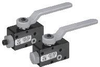
from Vektek, LLC
Manual Dump Valves are compact packages that include a manual shutoff valve, check valve, filter screen, auxiliary gauge port and manifold mounting ports. Available with optional manual pressure bleed port. These valves provide separate control of a tombstone face or pallet circuit when inteegrated... [See More]
- Valve Type: Block Bleed; Hydraulic; Shut Off; Unload Valve
- Number of Ports: 1
- Maximum Pressure: 1000.00 to 5000.00
- Actuation: Manual

from Hy-Lok USA, Inc.
Bleed Valves. Pressure rating up to 10000 psig (689 bar) at 100 ºF(37 ºC). Temperature rating from -65 ºF to 850 ºF (-54 ºC to 454 ºC) with stainless steel, from -20 ºF to 450 ºF(-29 ºC to 232 ºC) with carbon steel, from -65 ºF to 500 ºF... [See More]
- Valve Type: Block Bleed; Hydraulic
- Maximum Pressure: 10000.00
- Valve Size: 0.12 to 0.50
- Actuation: Manual