
PVDF Pressure Relief Valves
Description
PVDF Pressure Relief Valves are designed to automatically release excess pressure from a system to prevent over-pressurization. These valves are typically self-operating and are set to open at a predetermined pressure level, allowing the excess fluid to escape and thus maintaining the system's pressure within safe limits.
Working Principle
PVDF Pressure Relief Valves operate on a simple yet effective principle. They are typically spring-loaded, where a spring maintains a force that keeps the valve closed under normal conditions. When the pressure within the system exceeds the set threshold, the force exerted by the fluid pressure overcomes the spring force, causing the valve to open. This release of pressure prevents potential damage to the system. Once the pressure drops back to a safe level, the spring force closes the valve again. These valves are crucial in maintaining system integrity and preventing catastrophic failures due to overpressure.
Applications
PVDF Pressure Relief Valves are used in various industries to ensure safety and operational efficiency. In chemical plants, they prevent overpressure in reactors and storage tanks. In the power generation sector, they are used to protect boilers and steam systems from excessive pressure. They are also employed in water treatment facilities to safeguard pipelines and storage vessels.
Advantages over other Process Valves
PVDF Pressure Relief Valves offer several advantages over other types of process valves. Their chemical resistance makes them suitable for handling aggressive fluids, which is particularly beneficial in chemical processing industries. Additionally, their ability to operate automatically without external power sources enhances their reliability and reduces operational costs.
Limitations
One of the limitations of PVDF Pressure Relief Valves is their performance at elevated temperatures. PVDF material does not perform well under high-temperature conditions, which can limit their use in certain high-temperature applications. Additionally, these valves may not be suitable for applications requiring "pop safety" features, as they are not designed for such purposes.
Considerations
When selecting PVDF Pressure Relief Valves, several factors should be considered. Initial costs can vary depending on the size and specifications of the valve. Operating expenses are generally low due to their self-operating nature, but maintenance costs should be factored in, especially in environments with aggressive chemicals that may affect the valve's longevity. Durability is generally high due to the chemical resistance of PVDF, but regular inspections and maintenance are recommended to ensure accuracy and reliability. Replacement costs should also be considered, particularly if the valves are used in harsh conditions that may accelerate wear and tear.
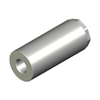
from Blacoh Fluid Control, Inc.
1/2" PVDF, AUTOMATIC DEGASSING VALVE, NPT [See More]
- Primary Material: PVDF
- Maximum Pressure: 150.00
- Valve Size: 0.50
- Connection Description: Threaded; FNPT
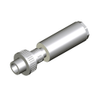
from Blacoh Fluid Control, Inc.
1/2" PVDF, AUTOMATIC DEGASSING VALVE, UNION [See More]
- Primary Material: PVDF
- Maximum Pressure: 150.00
- Valve Size: 0.50
- Connection Description: UNION

from Blacoh Fluid Control, Inc.
1/4" PVDF PRESSURE RELIEF VALVE, EPDM, NPT, MINI [See More]
- Primary Material: PVDF
- Maximum Pressure: 150.00
- Valve Size: 0.25
- Connection Description: Threaded; FNPT

from Blacoh Fluid Control, Inc.
1/2" PVDF PRESSURE RELIEF VALVE, EPDM, NPT [See More]
- Primary Material: PVDF
- Maximum Pressure: 150.00
- Valve Size: 0.50
- Connection Description: Threaded; FNPT
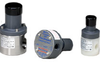
from Iwaki America and Walchem, IWAKI America Inc
Walchem diaphragm back pressure valves are used to enhance the performance of chemical feed pumps and systems by providing a constant discharge head pressure. These valves also function as an antisyphon valve. The diaphragm is held against the seat by the internal spring. Back pressure is adjustable... [See More]
- Primary Material: PVDF
- Maximum Pressure: 150.00
- Valve Size: 0.50
- Controlled Pressure Range: 0.00 to 150.00