
Union Pressure Relief Valves
Description
Union Pressure Relief Valves are designed to protect systems from over-pressurization by automatically releasing excess pressure. These valves are self-operating and are typically used to regulate fluid flow, ensuring that the pressure within a system does not exceed a predetermined limit.
Working Principle
Union Pressure Relief Valves operate based on a balance of forces. They are normally closed, maintained in this position by a spring force acting on a valve disk or diaphragm. When the pressure in the system exceeds the set pressure, the force exerted by the fluid pressure overcomes the spring force, causing the valve to open. This allows the excess fluid to escape, reducing the pressure in the system to a safe level. The valve then closes once the pressure drops below the set threshold. This mechanism is crucial for preventing damage to equipment and ensuring safety in pressure systems.
Applications
Pressure relief valves are widely used in various industries to protect equipment and ensure safety. Specific examples include their use in steam boilers to prevent catastrophic failure, in hydraulic systems to manage pressure surges, and in chemical processing plants to safeguard against over-pressurization of vessels.
Advantages over other Process Valves
Pressure relief valves offer distinct advantages over other types of process valves. They provide automatic pressure regulation without the need for external control systems, making them reliable and cost-effective. Unlike some other valves, they are designed to respond quickly to pressure changes, ensuring immediate protection of the system.
Limitations
One limitation of pressure relief valves is that they are not suitable for applications requiring precise pressure control, as they are primarily designed for safety rather than regulation. Additionally, they may not be suitable for all types of fluids, particularly those that are highly viscous or contain solid particles, which could impede the valve's operation.
Considerations
When selecting a pressure relief valve, several factors should be considered. Initial costs can vary depending on the valve's size and material. Operating expenses are generally low, as these valves are self-operating and require minimal external control. Durability is an important consideration, as the valve must withstand the operating conditions of the system. Accuracy in maintaining the set pressure is crucial for safety, and regular maintenance is necessary to ensure reliable operation. Replacement and maintenance costs should also be factored into the overall cost of ownership.
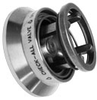
from Check-All Valve Mfg. Co.
The Union Insert Valve is the threaded pipe counterpart of the Flange Insert Valve. Designed to be inserted into most standard ground joint unions, it provides the simplest and most economical way to install a check valve in a threaded pipe system. A check valve may be installed anywhere in the... [See More]
- Connection Description: Union; Face Seal (optional feature); 1/2" Line Size
- Maximum Pressure: 3000.00
- Valve Size: 0.50
- Primary Material: Brass / Bronze; Stainless Steel; Steel; Exotic Metal; Alloy 20, Alloy C-276, Titanium
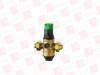
from Radwell International
PRESSURE RELIEF VALVE, 1/2 INCH INLET, DIALSET FEMALE, NPT, DOUBLE UNION, 25-90 PSI OUTLET RANGE, 250 PSI MAX INLET, REDUCING RATIO 10:1 MAX, D06F-1/2A, REPLACES DS05D1013. FREE 2 YEAR RADWELL WARRANTY [See More]
- Connection Description: Union