
Powder Diffractometers
Last Updated: April 1, 2025
Description
Powder diffractometers are specialized instruments used to analyze the structural properties of crystalline materials. They achieve this by measuring the diffraction patterns of X-rays, gamma rays, electron beams, or neutron beams as they interact with a powdered sample. These patterns provide critical information about the crystal structure, grain size, texture, and residual stress of the material being studied.
Working Principle
Powder diffractometers operate by directing a beam of X-rays or other radiation at a powdered sample. As the beam interacts with the sample, it is diffracted at specific angles that depend on the wavelength of the radiation and the structure of the crystal. The diffracted beams are then detected and analyzed to produce a diffraction pattern. This pattern is used to create an electron density map, which reveals the arrangement of atoms within the crystal. The process is highly sensitive to the electron density, making it particularly useful for studying the crystalline structure of solids.
Applications
Powder diffractometers are widely used in various fields for specific applications. For example, they are employed in the analysis of geological samples to determine the mineral composition of rocks. In the pharmaceutical industry, they are used to identify and quantify different crystalline forms of a drug, which can affect its stability and efficacy. Additionally, they are utilized in materials science to study the effects of manufacturing processes on the microstructure of metals and ceramics.
Advantages over other Diffractometers
One of the key advantages of powder diffractometers is their ability to analyze polycrystalline samples, which are more common in practical applications than single crystals. This makes them more versatile and applicable to a wider range of materials. Additionally, they can provide detailed information about the crystal structure without the need for large, perfect crystals, which are often difficult to obtain.
Limitations
Despite their advantages, powder diffractometers have certain limitations. The resolution of the diffraction pattern can be affected by factors such as sample preparation and instrument calibration. Overlapping peaks in the diffraction pattern can complicate the analysis, particularly for complex mixtures. Additionally, the technique is less effective for materials with low electron density, such as those containing a high proportion of hydrogen atoms.
Considerations
When considering the use of a powder diffractometer, several factors should be taken into account. Initial costs can be significant, as the instruments require precise components and calibration. Operating expenses include maintenance of the X-ray source and detectors, as well as the need for skilled personnel to interpret the results. Durability and accuracy are critical, as any misalignment or wear can affect the quality of the data. Replacement and maintenance costs should also be considered, as components such as X-ray tubes and detectors may need periodic replacement to ensure optimal performance.
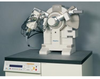
from Rigaku Corporation
The TTRAX III is the world ’s most powerful diffractometer. Utilizing an 18 kW rotating anode X-ray source in a θ/ θ geometry provides the perfect system for demanding applications. Both thin film diffraction and the determination of trace phases in powdered samples benefit greatly... [See More]
- Diffraction Method: Powder
- Detector: Cross Beam Optical (CBO) Technology
- Wave: X-Ray
- X-ray Generator Output: 18000

from Rigaku Corporation
2012 heralds the newest additions to the MiniFlex series of benchtop X-ray diffraction (XRD) analyzers. The new 5th generation MiniFlex is a general purpose X-ray diffractometer that can perform qualitative and quantitative analysis of polycrystalline materials. MiniFlex is now available in two... [See More]
- Diffraction Method: Powder
- Detector: Scintillation
- Wave: X-Ray
- Positioning System: Goniometer

from Rigaku Corporation
A compact, fully integrated high-resolution, small molecule crystallography system, the Rigaku R-AXIS RAPID II is the latest member of the RAPID family of large-area curved image plate (IP) X-ray diffraction systems. The RAPID II combines every component needed for a high-performance X-ray... [See More]
- Diffraction Method: Powder
- Detector: Plate/Foil
- Wave: X-Ray
- Positioning System: Goniometer
from Rigaku Corporation
The SmartLab is the most novel high-resolution diffractometer available today. Perhaps its most novel feature is the SmartLab Guidance software, which provides the user with an intelligent interface that guides you through the intricacies of each experiment. It is like having an expert standing by... [See More]
- Diffraction Method: Powder
- Detector: Scintillation
- Wave: X-Ray
- Positioning System: Goniometer; Eulerian Cradle

from Rigaku Corporation
Macromolecular crystallography and NMR are two of the most important techniques for furthering our understanding of structural biology. However, the fact remains that three-dimensional structures derived from NMR and single crystal analysis are difficult to achieve at best and quite often the... [See More]
- Diffraction Method: Powder; Single Crystal
- Detector: Camera
- Wave: X-Ray
- Positioning System: Stage for X, Y or Z positioning of a sample or detector