
X-Ray Diffractometers
Last Updated: April 1, 2025
Description
X-Ray Diffractometers are sophisticated instruments used to measure the crystal structure, grain size, texture, and residual stress of materials. They achieve this by analyzing the interaction of X-ray beams with a sample. These devices are crucial in studying the crystalline structure of solids and ionizing gases, providing detailed insights into the electron density maps of given crystalline structures .
Working Principle
X-Ray Diffractometers operate by directing X-ray beams at a sample, where the beams are diffracted by the electron density within the crystal. The angles and intensities of these diffracted beams are measured to produce a diffraction pattern, which can be analyzed to determine the crystal structure. The utility of X-ray diffraction lies in its ability to provide detailed information about the atomic arrangement within a crystal, making it an essential tool for characterizing materials .
Applications
X-Ray Diffractometers are widely used in various fields for specific applications. For instance, they are employed in the quantitative phase analysis of materials, identification of crystal systems, and refinement of cell parameters. These instruments are also crucial in the structural analysis of materials, which has seen significant advancements over the years . Additionally, they are used in the microanalysis of rocks and minerals, particularly in planetary exploration missions, such as those conducted by NASA for Mars exploration .
Advantages over other Diffractometers
X-Ray Diffractometers offer several advantages over other types of diffractometers. They are particularly effective in determining the positions of atoms within a crystal due to their sensitivity to electron density. This makes them superior for analyzing materials with low electron density, such as those containing hydrogen atoms, where other diffractometers like neutron diffractometers might be more suitable .
Limitations
One limitation of X-Ray Diffractometers is their reliance on the electron density of the sample, which can make it challenging to accurately determine the positions of atoms with low electron density, such as hydrogen. Additionally, the requirement for high-quality crystals can be a constraint in some analyses .
Considerations
When considering the use of X-Ray Diffractometers, several factors should be taken into account. Initial costs can be significant, as these instruments are complex and require precise components. Operating expenses may include maintenance of the X-ray source and detectors, as well as the need for skilled personnel to operate the equipment and interpret the data. Durability and accuracy are generally high, but regular calibration and maintenance are necessary to ensure optimal performance. Replacement and maintenance costs can vary depending on the specific model and usage conditions .
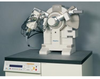
from Rigaku Corporation
The TTRAX III is the world ’s most powerful diffractometer. Utilizing an 18 kW rotating anode X-ray source in a θ/ θ geometry provides the perfect system for demanding applications. Both thin film diffraction and the determination of trace phases in powdered samples benefit greatly... [See More]
- Wave: X-Ray
- Diffraction Method: Powder
- Detector: Cross Beam Optical (CBO) Technology
- X-ray Generator Output: 18000
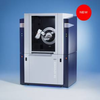
from Bruker Corporation
Non-destructive Characterization of Material Properties. Bruker's X-ray Diffraction and Scattering portfolio enables detailed analysis of any material from fundamental research to industrial quality control providing forward looking solutions to our customers today. Applications of these qualitative... [See More]
- Wave: X-Ray
- Features: Benchtop (optional feature); High Resolution/Crystal Quality Capabilities (optional feature)
- Diffraction Method: Powder (optional feature); Single Crystal (optional feature); Small-Angle X-ray Scattering (SAXS)
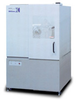
from Shimadzu Scientific Instruments, Inc.
XRD-6000 – General-purpose X-Ray Diffractometer. The Windows XP-supported application software ushers this compact, multi-functional, general-purpose X-ray Diffractometer into the networking era of analysis. With its basic ease of use and abundant functions, the XRD-6000 offers solutions... [See More]
- Wave: X-Ray
- Positioning System: Goniometer
- Detector: Scintillation
- Diffracted Beam Optics: Crystal Monochromator

from Rigaku Corporation
For the expert small molecule crystallographer, where a flexible configuration is required, Rigaku offers the Saturn Kappa chemical crystallography system. The Saturn Kappa is a popular choice of system for single wavelength small molecule crystallography. Most often configured with molybdenum (Mo)... [See More]
- Wave: X-Ray
- Positioning System: Goniometer
- Detector: Camera; CCD Detector
- Diffracted Beam Optics: Crystal Monochromator

from Rigaku Corporation
The new Rigaku XtaLAB mini benchtop X-ray crystallography system for automated three dimensional (3D) chemical structure determination is the latest in affordable single crystal X-ray diffraction. Designed to automatically produce publication quality structures for researchers who have no special... [See More]
- Wave: X-Ray
- Features: Benchtop
- Detector: Camera; CCD Detector

from Rigaku Corporation
2012 heralds the newest additions to the MiniFlex series of benchtop X-ray diffraction (XRD) analyzers. The new 5th generation MiniFlex is a general purpose X-ray diffractometer that can perform qualitative and quantitative analysis of polycrystalline materials. MiniFlex is now available in two... [See More]
- Wave: X-Ray
- Diffraction Method: Powder
- Detector: Scintillation
- Positioning System: Goniometer

from Rigaku Corporation
The Saturn A200 HG is the largest aperture CCD detector available for the home laboratory designed to provide fast, accurate data to high resolution on a wide variety of samples. The A200 provides the ability to resolve 4 times as many diffraction orders as a conventional CCD detector while... [See More]
- Wave: X-Ray
- Features: Benchtop
- Detector: Camera; CCD Detector

from Rigaku Corporation
Rigaku's Compact HomeLab was designed for researchers who want a low-maintenance X-ray system with the ultimate in experimental flexibility. The foundation of this system is the third generation Rigaku MicroMax ™-003, an integrated microfocus sealed tube generator, and specialized confocal... [See More]
- Wave: X-Ray
- Positioning System: Goniometer
- Detector: Plate/Foil (optional feature); CCD Detector
- X-ray Generator Output: 30

from Rigaku Corporation
A compact, fully integrated high-resolution, small molecule crystallography system, the Rigaku R-AXIS RAPID II is the latest member of the RAPID family of large-area curved image plate (IP) X-ray diffraction systems. The RAPID II combines every component needed for a high-performance X-ray... [See More]
- Wave: X-Ray
- Diffraction Method: Powder
- Detector: Plate/Foil
- Positioning System: Goniometer