
Benchtop Diffractometers
Last Updated: April 1, 2025
Description
Benchtop diffractometers are compact instruments designed to measure the crystal structure, grain size, texture, and residual stress of materials and compounds. They achieve this by analyzing the interaction of X-ray beams, gamma rays, electron beams, or neutron beams with a sample. These devices are typically used to study the crystalline structure of solids and ionizing gases, providing detailed insights into the electron density and arrangement within a crystal.
Working Principle
Benchtop diffractometers operate by directing a beam, such as X-rays, at a sample. As the beam interacts with the sample, it is diffracted at specific angles that depend on the wavelength of the beam, the orientation of the crystal, and the structure of the crystal itself. The diffracted beams are then detected and analyzed to produce a diffraction pattern. This pattern is used to create an electron density map, which reveals the arrangement of atoms within the crystal. The process involves fitting the measured diffraction data with a continuous function to accurately determine the characteristics of each diffraction peak, such as position and intensity.
Applications
Benchtop diffractometers are used in a variety of specific applications. For example, they are employed in the microanalysis of rocks and minerals, where they help identify mineral compositions and structures. They are also used in planetary exploration missions, such as those involving the Mars Pathfinder probe, to determine the elemental composition and suggest mineral types on other planets.
Advantages over other Diffractometers
One of the key advantages of benchtop diffractometers is their compact size, which makes them suitable for use in laboratories with limited space. They are also portable, allowing for on-site analysis in fieldwork or remote locations. Additionally, benchtop models often integrate both X-ray diffraction (XRD) and X-ray fluorescence (XRF) capabilities, enabling simultaneous collection of diffraction and fluorescence data for comprehensive material analysis.
Limitations
Benchtop diffractometers may have limitations in terms of the maximum specimen diameter they can accommodate, which can restrict the size of samples that can be analyzed. They may also have lower angular accuracy and peak count rates compared to larger, more advanced diffractometers, potentially affecting the precision of the measurements.
Considerations
When considering the purchase and use of a benchtop diffractometer, several factors should be taken into account. Initial costs can vary depending on the specific features and capabilities of the instrument. Operating expenses may include maintenance of the X-ray source and detectors, as well as the cost of consumables. Durability and accuracy are important considerations, as these factors will influence the long-term reliability and performance of the instrument. Replacement and maintenance costs should also be evaluated to ensure the instrument remains in optimal working condition over time.
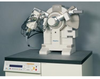
from Rigaku Corporation
The TTRAX III is the world ’s most powerful diffractometer. Utilizing an 18 kW rotating anode X-ray source in a θ/ θ geometry provides the perfect system for demanding applications. Both thin film diffraction and the determination of trace phases in powdered samples benefit greatly... [See More]
- Features: Benchtop; High Resolution/Crystal Quality Capabilities
- Detector: Cross Beam Optical (CBO) Technology
- Wave: X-Ray
- Diffraction Method: Powder

from Rigaku Corporation
For the expert small molecule crystallographer, where a flexible configuration is required, Rigaku offers the Saturn Kappa chemical crystallography system. The Saturn Kappa is a popular choice of system for single wavelength small molecule crystallography. Most often configured with molybdenum (Mo)... [See More]
- Features: Benchtop
- Detector: Camera; CCD Detector
- Wave: X-Ray
- Positioning System: Goniometer

from Rigaku Corporation
The new Rigaku XtaLAB mini benchtop X-ray crystallography system for automated three dimensional (3D) chemical structure determination is the latest in affordable single crystal X-ray diffraction. Designed to automatically produce publication quality structures for researchers who have no special... [See More]
- Features: Benchtop
- Detector: Camera; CCD Detector
- Wave: X-Ray

from Rigaku Corporation
2012 heralds the newest additions to the MiniFlex series of benchtop X-ray diffraction (XRD) analyzers. The new 5th generation MiniFlex is a general purpose X-ray diffractometer that can perform qualitative and quantitative analysis of polycrystalline materials. MiniFlex is now available in two... [See More]
- Features: Benchtop
- Detector: Scintillation
- Wave: X-Ray
- Diffraction Method: Powder

from Rigaku Corporation
The Saturn A200 HG is the largest aperture CCD detector available for the home laboratory designed to provide fast, accurate data to high resolution on a wide variety of samples. The A200 provides the ability to resolve 4 times as many diffraction orders as a conventional CCD detector while... [See More]
- Features: Benchtop
- Detector: Camera; CCD Detector
- Wave: X-Ray

from Rigaku Corporation
A compact, fully integrated high-resolution, small molecule crystallography system, the Rigaku R-AXIS RAPID II is the latest member of the RAPID family of large-area curved image plate (IP) X-ray diffraction systems. The RAPID II combines every component needed for a high-performance X-ray... [See More]
- Features: Benchtop; Stress Measurement
- Detector: Plate/Foil
- Wave: X-Ray
- Diffraction Method: Powder

from Rigaku Corporation
The R-AXIS HTC was designed with speed in mind. High throughput crystallography requires an area detector that can measure accurate data rapidly. The R-AXIS HTC combines the proven data quality that is achieved with an imaging plate area detector with data acquisition speed that approaches that of... [See More]
- Features: Benchtop
- Detector: Plate/Foil
- Wave: X-Ray
- Positioning System: Goniometer

from Rigaku Corporation
The R-AXIS IV++ is arguably the most productive X-ray area detector in the history of macromolecular crystallography. In production for well over a decade and continuously improved during that time period, the success of the R-AXIS IV++ is a testament to the suitability of imaging plate technology... [See More]
- Features: Benchtop
- Detector: Plate/Foil
- Wave: X-Ray
- Positioning System: Goniometer
from Rigaku Corporation
The SmartLab is the most novel high-resolution diffractometer available today. Perhaps its most novel feature is the SmartLab Guidance software, which provides the user with an intelligent interface that guides you through the intricacies of each experiment. It is like having an expert standing by... [See More]
- Features: Benchtop
- Detector: Scintillation
- Wave: X-Ray
- Diffraction Method: Powder

from Rigaku Corporation
Our most powerful protein crystallography system, the Ultimate HomeLab is a complete home X-ray diffraction system that enables data collection on a wide range of protein crystal samples and dramatically reduces your need to utilize a synchrotron source. As all of Rigaku ’s protein... [See More]
- Features: Benchtop
- Detector: Plate/Foil; CCD Detector
- Wave: X-Ray
- Diffraction Method: Rotating Crystal

from Rigaku Corporation
Our most popular protein crystallography system, the HighFlux HomeLab is a complete home X-ray diffraction system that enables data collection on a wide range of protein crystal samples. As all of Rigaku ’s protein crystallography systems, the HKL3000-R software suite provides instrument... [See More]
- Features: Benchtop
- Detector: Plate/Foil; CCD Detector
- Wave: X-Ray
- Diffraction Method: Rotating Crystal

from Rigaku Corporation
Anomalous scattering with soft X-ray radiation creates new possibilities in phasing for macromolecular crystallography. The heart of a Cr-Phasing HomeLab is any Rigaku rotating anode generator with a chromium anode. All Rigaku rotating anode generators can be equipped with chromium (Cr) targets to... [See More]
- Features: Benchtop
- Detector: Plate/Foil
- Wave: X-Ray
- Diffraction Method: Rotating Crystal

from Rigaku Corporation
Macromolecular crystallography and NMR are two of the most important techniques for furthering our understanding of structural biology. However, the fact remains that three-dimensional structures derived from NMR and single crystal analysis are difficult to achieve at best and quite often the... [See More]
- Features: Benchtop
- Detector: Camera
- Wave: X-Ray
- Diffraction Method: Powder; Single Crystal

from Rigaku Corporation
The S-MAX3000 pinhole SAXS camera design is available with a choice of conventional or high brilliance X-ray sources. A 3-meter, fully evacuated camera length provides both high intensity and high resolution. Coupled with a fully integrated 2-dimensional multi-wire proportional counter, the system... [See More]
- Features: Benchtop
- Detector: Camera
- Wave: X-Ray
- Positioning System: Stage for X, Y or Z positioning of a sample or detector

from Rigaku Corporation
As synchrotron beamlines have become more prevalent for research in structural biology, many home lab X-ray systems are used mainly for screening crystals in advance of synchrotron data collection. To meet the needs of this type of work flow, Rigaku has developed the ScreenMachine, a self contained... [See More]
- Features: Benchtop
- Detector: Camera; CCD Detector
- Wave: X-Ray
- X-ray Generator Output: 30