
Monochromating Crystal Diffractometers
Last Updated: April 1, 2025
Description
Monochromating crystal diffractometers are specialized instruments used to measure the crystal structure of materials. They utilize monochromating crystals to isolate specific wavelengths of X-rays, allowing for precise analysis of the crystalline structure by examining the diffraction patterns produced when X-rays interact with the sample.
Working Principle
Monochromating crystal diffractometers operate based on the principles of X-ray diffraction and Bragg's Law. When X-rays are directed at a crystal, they are diffracted at specific angles depending on the crystal's structure and the wavelength of the X-rays. The monochromating crystal is used to select a specific wavelength from the polychromatic X-ray source, ensuring that only X-rays of a particular wavelength interact with the sample. This is achieved by setting the crystal so that the incident X-rays fall on a specific set of Bragg planes, which determines the wavelength of the reflected light. This precise control over the wavelength is crucial for accurate diffraction measurements, making these diffractometers highly useful for detailed structural analysis.
Applications
Monochromating crystal diffractometers are employed in various scientific and industrial applications. They are particularly useful in materials science for analyzing the crystalline structure of solids. For example, they can be used to study the grain size, texture, and residual stress in metals and ceramics. In research settings, these diffractometers are essential for examining complex crystal structures and for conducting in-depth studies of material properties at the atomic level.
Advantages over other Diffractometers
One of the primary advantages of monochromating crystal diffractometers is their ability to provide highly precise wavelength selection, which enhances the accuracy of diffraction measurements. This precision is particularly beneficial when analyzing complex crystal structures or when high-resolution data is required. Additionally, the use of monochromating crystals can reduce background noise in the diffraction pattern, leading to clearer and more interpretable results compared to other diffractometer types that may not use monochromation.
Limitations
Despite their advantages, monochromating crystal diffractometers have certain limitations. They can be more complex and expensive to operate due to the need for precise alignment and calibration of the monochromating crystals. Additionally, the requirement for specific crystal orientations can limit the range of materials that can be effectively analyzed. The setup and maintenance of these instruments can also be more time-consuming compared to simpler diffractometer designs.
Considerations
When considering the use of monochromating crystal diffractometers, several factors should be taken into account. The initial cost of these instruments can be high due to their complexity and the precision components required. Operating expenses may also be significant, particularly if specialized crystals or maintenance services are needed. However, the durability and accuracy of these diffractometers can justify the investment for applications requiring high-resolution data. Replacement and maintenance costs should be factored into the overall budget, as regular calibration and potential component replacements are necessary to maintain optimal performance.

from Rigaku Corporation
For the expert small molecule crystallographer, where a flexible configuration is required, Rigaku offers the Saturn Kappa chemical crystallography system. The Saturn Kappa is a popular choice of system for single wavelength small molecule crystallography. Most often configured with molybdenum (Mo)... [See More]
- Diffracted Beam Optics: Crystal Monochromator
- Detector: Camera; CCD Detector
- Wave: X-Ray
- Positioning System: Goniometer
from Shimadzu Scientific Instruments, Inc.
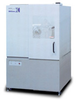
XRD-6000 – General-purpose X-Ray Diffractometer. The Windows XP-supported application software ushers this compact, multi-functional, general-purpose X-ray Diffractometer into the networking era of analysis. With its basic ease of use and abundant functions, the XRD-6000 offers solutions... [See More]
- Diffracted Beam Optics: Crystal Monochromator
- Detector: Scintillation
- Wave: X-Ray
- Positioning System: Goniometer

from Rigaku Corporation
2012 heralds the newest additions to the MiniFlex series of benchtop X-ray diffraction (XRD) analyzers. The new 5th generation MiniFlex is a general purpose X-ray diffractometer that can perform qualitative and quantitative analysis of polycrystalline materials. MiniFlex is now available in two... [See More]
- Diffracted Beam Optics: Diffracted beam slits to reduce angular divergence; Crystal Monochromator; K-beta Absorption Filter
- Detector: Scintillation
- Wave: X-Ray
- Diffraction Method: Powder

from Rigaku Corporation
A compact, fully integrated high-resolution, small molecule crystallography system, the Rigaku R-AXIS RAPID II is the latest member of the RAPID family of large-area curved image plate (IP) X-ray diffraction systems. The RAPID II combines every component needed for a high-performance X-ray... [See More]
- Diffracted Beam Optics: Diffracted beam slits to reduce angular divergence; Crystal Monochromator
- Detector: Plate/Foil
- Wave: X-Ray
- Diffraction Method: Powder