
Scintillation Diffractometers
Last Updated: April 1, 2025
Description
Scintillation diffractometers are specialized instruments used to measure the diffraction patterns of materials. They operate by detecting the light emitted from a scintillator when it is struck by radiation, such as X-rays. This light is then converted into an electrical signal, which is used to analyze the crystal structure, grain size, texture, and residual stress of the sample material.
Working Principle
Scintillation diffractometers work by utilizing a scintillator, which is a material that emits light when it absorbs ionizing radiation. When X-rays or other forms of radiation hit the scintillator, it emits photons of visible light. This light is then detected by a photomultiplier tube (PMT) or other sensitive detectors, which convert the light into an electrical signal. The intensity and pattern of the emitted light provide information about the material's structure. This process is useful because it allows for the precise analysis of crystalline structures, which is essential in fields such as materials science and engineering.
Applications
Scintillation diffractometers are used in a variety of applications, including:
- Material Science: Analyzing the crystal structure of metals and alloys to determine properties such as strength and ductility.
- Geology: Studying mineral compositions and structures in rock samples.
- Pharmaceuticals: Investigating the crystalline forms of drugs to ensure proper formulation and stability.
- Semiconductor Industry: Examining the crystal orientation and quality of semiconductor wafers.
Advantages over other Diffractometers
Scintillation diffractometers offer several advantages over other types of diffractometers:
- High Sensitivity: The use of scintillators allows for the detection of low-intensity signals, making them suitable for analyzing weakly diffracting samples.
- Fast Response Time: Scintillation detectors can quickly convert radiation into electrical signals, enabling rapid data acquisition.
- Versatility: They can be used with various types of radiation, including X-rays, gamma rays, and neutrons, making them adaptable to different experimental needs.
Limitations
Despite their advantages, scintillation diffractometers have some limitations:
- Resolution: The resolution may be lower compared to other detector types, such as solid-state detectors, which can affect the precision of the measurements.
- Background Noise: Scintillation detectors can be susceptible to background noise, which may interfere with the accuracy of the results.
Considerations
When considering the use of scintillation diffractometers, several factors should be taken into account:
- Initial Costs: The cost of purchasing and setting up a scintillation diffractometer can be significant, depending on the complexity and capabilities of the system.
- Operating Expenses: Maintenance and operation costs, including the replacement of scintillator materials and photomultiplier tubes, should be considered.
- Durability: The durability of the scintillator and associated components can affect the long-term reliability and performance of the instrument.
- Accuracy: While scintillation diffractometers are generally accurate, the specific requirements of the application may necessitate additional calibration and validation steps to ensure precision.
- Replacement and Maintenance Costs: Regular maintenance and potential replacement of components like scintillators and detectors can add to the overall cost of ownership.

from Rigaku Corporation
2012 heralds the newest additions to the MiniFlex series of benchtop X-ray diffraction (XRD) analyzers. The new 5th generation MiniFlex is a general purpose X-ray diffractometer that can perform qualitative and quantitative analysis of polycrystalline materials. MiniFlex is now available in two... [See More]
- Detector: Scintillation
- Diffraction Method: Powder
- Wave: X-Ray
- Positioning System: Goniometer
from Shimadzu Scientific Instruments, Inc.
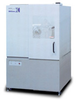
XRD-6000 – General-purpose X-Ray Diffractometer. The Windows XP-supported application software ushers this compact, multi-functional, general-purpose X-ray Diffractometer into the networking era of analysis. With its basic ease of use and abundant functions, the XRD-6000 offers solutions... [See More]
- Detector: Scintillation
- Positioning System: Goniometer
- Wave: X-Ray
- Diffracted Beam Optics: Crystal Monochromator
from Rigaku Corporation
The SmartLab is the most novel high-resolution diffractometer available today. Perhaps its most novel feature is the SmartLab Guidance software, which provides the user with an intelligent interface that guides you through the intricacies of each experiment. It is like having an expert standing by... [See More]
- Detector: Scintillation
- Diffraction Method: Powder
- Wave: X-Ray
- Positioning System: Goniometer; Eulerian Cradle