
Goniometer Diffractometers
Last Updated: April 1, 2025
Description
A goniometer diffractometer is an instrument designed to measure the angles at which X-rays, gamma rays, electron beams, or neutron beams are diffracted by a sample. This device is crucial for analyzing the crystal structure, grain size, texture, and residual stress of materials and compounds. It allows for precise angular positioning and rotation of the sample, which is essential for accurate diffraction measurements.
Working Principle
Goniometer diffractometers operate by rotating a sample around a fixed axis while directing a beam of X-rays or other radiation at it. As the sample rotates, the diffracted beams are detected at various angles. The goniometer's precise control over the sample's angular position enables the collection of detailed diffraction patterns. These patterns are then analyzed to determine the sample's crystalline structure. The utility of goniometer diffractometers lies in their ability to provide detailed insights into the atomic arrangement within a material, which is critical for understanding its properties and behavior.
Applications
Goniometer diffractometers are widely used in crystallography to study the atomic structure of crystals. They are also employed in materials science for analyzing the texture and stress of metals and alloys. In the field of semiconductor research, these instruments help in characterizing thin films and multilayer structures. Additionally, they are used in the pharmaceutical industry to investigate the crystalline forms of drugs, which can affect their stability and bioavailability.
Advantages over other Diffractometers
Goniometer diffractometers offer superior angular precision and control compared to other types of diffractometers. This precision is particularly beneficial in applications requiring detailed analysis of complex crystal structures. The ability to rotate the sample with high accuracy allows for the collection of comprehensive diffraction data, which is essential for precise structural determination.
Limitations
One limitation of goniometer diffractometers is the time required for data collection, as the process involves rotating the sample and capturing diffraction patterns at multiple angles. This can be time-consuming, especially for samples that require high-resolution data. Additionally, the complexity of the instrument may lead to higher initial costs and maintenance requirements compared to simpler diffractometer designs.
Considerations
When considering the purchase and use of a goniometer diffractometer, several factors should be taken into account. The initial cost of the instrument can be significant, and potential buyers should also consider the ongoing operating expenses, including maintenance and calibration. The durability and accuracy of the device are crucial for ensuring reliable results, and users should be prepared for potential replacement and maintenance costs over the instrument's lifespan. Additionally, the precision required for specific applications may dictate the choice of a particular model or configuration.

from Rigaku Corporation
For the expert small molecule crystallographer, where a flexible configuration is required, Rigaku offers the Saturn Kappa chemical crystallography system. The Saturn Kappa is a popular choice of system for single wavelength small molecule crystallography. Most often configured with molybdenum (Mo)... [See More]
- Positioning System: Goniometer
- Detector: Camera; CCD Detector
- Wave: X-Ray
- Diffracted Beam Optics: Crystal Monochromator
from Shimadzu Scientific Instruments, Inc.
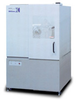
XRD-6000 – General-purpose X-Ray Diffractometer. The Windows XP-supported application software ushers this compact, multi-functional, general-purpose X-ray Diffractometer into the networking era of analysis. With its basic ease of use and abundant functions, the XRD-6000 offers solutions... [See More]
- Positioning System: Goniometer
- Detector: Scintillation
- Wave: X-Ray
- Diffracted Beam Optics: Crystal Monochromator

from Rigaku Corporation
2012 heralds the newest additions to the MiniFlex series of benchtop X-ray diffraction (XRD) analyzers. The new 5th generation MiniFlex is a general purpose X-ray diffractometer that can perform qualitative and quantitative analysis of polycrystalline materials. MiniFlex is now available in two... [See More]
- Positioning System: Goniometer
- Detector: Scintillation
- Wave: X-Ray
- Diffraction Method: Powder

from Rigaku Corporation
Rigaku's Compact HomeLab was designed for researchers who want a low-maintenance X-ray system with the ultimate in experimental flexibility. The foundation of this system is the third generation Rigaku MicroMax ™-003, an integrated microfocus sealed tube generator, and specialized confocal... [See More]
- Positioning System: Goniometer
- Detector: Plate/Foil (optional feature); CCD Detector
- Wave: X-Ray
- X-ray Generator Output: 30

from Rigaku Corporation
A compact, fully integrated high-resolution, small molecule crystallography system, the Rigaku R-AXIS RAPID II is the latest member of the RAPID family of large-area curved image plate (IP) X-ray diffraction systems. The RAPID II combines every component needed for a high-performance X-ray... [See More]
- Positioning System: Goniometer
- Detector: Plate/Foil
- Wave: X-Ray
- Diffraction Method: Powder

from Rigaku Corporation
The R-AXIS HTC was designed with speed in mind. High throughput crystallography requires an area detector that can measure accurate data rapidly. The R-AXIS HTC combines the proven data quality that is achieved with an imaging plate area detector with data acquisition speed that approaches that of... [See More]
- Positioning System: Goniometer
- Detector: Plate/Foil
- Wave: X-Ray
- Features: Benchtop

from Rigaku Corporation
The R-AXIS IV++ is arguably the most productive X-ray area detector in the history of macromolecular crystallography. In production for well over a decade and continuously improved during that time period, the success of the R-AXIS IV++ is a testament to the suitability of imaging plate technology... [See More]
- Positioning System: Goniometer
- Detector: Plate/Foil
- Wave: X-Ray
- Features: Benchtop