
Thermal Fusing Plugin Style Surge Suppressors
Description
Thermal Fusing Plugin Style Surge Suppressors are devices designed to protect electrical equipment from voltage transients by plugging directly into wall outlets. These suppressors are equipped with thermal fuses that provide an additional layer of protection by disconnecting the power in the event of excessive heat buildup, thereby preventing damage to the connected devices.
Working Principle
Thermal Fusing Plugin Style Surge Suppressors operate by utilizing a combination of surge protection technologies, such as metal oxide varistors (MOVs) or silicon avalanche diodes, to absorb and dissipate excess electrical energy from voltage spikes. The thermal fuse acts as a safety mechanism that interrupts the electrical circuit if the suppressor overheats, ensuring that the connected equipment remains safe from potential damage. This dual-layer protection is particularly useful in environments prone to frequent or severe power surges, as it helps maintain the integrity of sensitive electronic devices.
Applications
These surge suppressors are commonly used in residential and commercial settings to protect a variety of electronic devices. Specific examples include safeguarding home entertainment systems, computers, and office equipment from power surges caused by lightning strikes or electrical faults. They are also employed in industrial environments to protect sensitive machinery and control systems from transient voltage spikes.
Advantages over other Plugin Style Surge Suppressors
Thermal Fusing Plugin Style Surge Suppressors offer distinct advantages over other types of plugin style surge suppressors. The inclusion of a thermal fuse provides an additional layer of safety by preventing overheating, which is not typically found in standard surge suppressors. This feature enhances the overall reliability and effectiveness of the device, making it a preferred choice for environments with high exposure to power surges.
Limitations
One limitation of Thermal Fusing Plugin Style Surge Suppressors is that the thermal fuse, once activated, requires replacement to restore the device's functionality. This can lead to increased maintenance efforts and costs compared to suppressors without thermal fuses. Additionally, these devices may have a limited lifespan due to the wear and tear on the thermal fuse and other components over time.
Considerations
When selecting Thermal Fusing Plugin Style Surge Suppressors, it is important to consider factors such as initial cost, operating expenses, and durability. While these devices may have a higher upfront cost due to the added thermal fuse feature, they can offer long-term savings by preventing costly damage to connected equipment. Durability is also a key consideration, as the effectiveness of the surge suppressor can diminish over time with repeated exposure to power surges. Regular maintenance and timely replacement of the thermal fuse are essential to ensure continued protection and accuracy in performance.
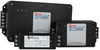
from Surge Suppression Incorporated
Plug & Receptacle Protection Series [See More]
- Features: Continuously Live Electrical Outputs Available; Integral Grounding Wire; Hospital Grade (optional feature); Sine-wave Tracking (optional feature); On-board Thermal Fusing; Simple visual indicators (e.g. LEDs)
- Technology: Hybrid
- Mounting: Plug-in
- Type: RJ11, RJ13 or RJ14 Phone Jacks (optional feature); RJ41, RJ45 or RJ48 Data Jacks (optional feature); Coaxial Cable Connectors (BNC, F Type etc.) (optional feature); 6 Foot Cord with 6-Plug Model
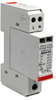
from CITEL SURGE PROTECTION
CITEL model DS240 surge protectors are used mainly for distribution panels of single-phase and three-phase networks. They provide common-mode protection (between the active conductors and ground) and are available with an option remote alarm. The DS240 is built with a plug-in module and a fixed... [See More]
- Features: Integral Disconnect; On-board Thermal Fusing
- Operating Temp: -40 to 185
- Mounting: Symmetrical Rail 35 mm
- Type: Screw Down Terminals