
Pressure Jet Burners
Description
Pressure jet burners are devices designed to atomize fuel into a fine spray of droplets using supply-pressure energy. This atomization process is crucial for achieving efficient combustion, as it allows the fuel to mix thoroughly with air, facilitating a complete and clean burn.
Working Principle
Pressure jet burners operate by utilizing the energy from the fuel supply pressure to atomize the fuel. The fuel is forced through a nozzle at high pressure, breaking it into a fine mist of droplets. This mist is then mixed with air, which is supplied by a fan or blower, to create an optimal air-fuel mixture for combustion. The fine atomization of the fuel ensures that it burns more completely and efficiently, reducing emissions and improving energy output. The simplicity of the pressure jet system, with no moving parts in the atomization process, contributes to its reliability and ease of maintenance.
Applications
Pressure jet burners are commonly used in industrial settings where efficient and reliable combustion is required. Specific examples include their use in boilers for generating steam, in industrial furnaces for metal processing, and in kilns for ceramics production. They are also employed in heating systems for large buildings and facilities, where their ability to provide consistent and controlled heat output is highly valued.
Advantages over other Burners
Pressure jet burners offer several advantages over other types of burners. One significant advantage is their ability to achieve extremely good combustion results when adequate fuel pressure is supplied, leading to higher efficiency and lower emissions. Additionally, the lack of moving parts in the atomization process enhances their reliability and reduces maintenance requirements compared to burners with mechanical atomization systems.
Limitations
Despite their advantages, pressure jet burners have limitations. They require a consistent and adequate fuel pressure to function optimally, which may not be feasible in all settings. Additionally, the fine atomization process can be sensitive to impurities in the fuel, necessitating high-quality fuel to prevent clogging and ensure efficient operation.
Considerations
When considering the use of pressure jet burners, several factors should be taken into account. Initial costs can vary depending on the size and capacity of the burner, but they are generally competitive with other burner types. Operating expenses are influenced by fuel quality and pressure requirements, which can affect efficiency and maintenance needs. Durability is typically high due to the lack of moving parts, but regular maintenance is necessary to ensure the nozzles remain unclogged and the system operates efficiently. Replacement and maintenance costs are generally lower than those for burners with more complex mechanical systems, but they can increase if fuel quality is not maintained.
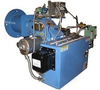
from Industrial Combustion, LLC
Suitable for cast iron, firebox and scotch marine boilers; the FP series burners are effective where high heat release is required or where a restricted combustion chamber exists. The FP series offers natural gas, propane gas, pressure atomized #2 oil and combination gas/oil fuel options at... [See More]
- Atomization Method: Pressure Jet
- Combustion Fuel: Natural Gas (optional feature); Light Oil (optional feature); Propane (optional feature)
- Application: Firebox/Scotch Marine
- Maximum Capacity: 550 to 4200
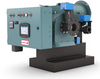
from Cleaver-Brooks
Suitable for firetube, watertube, firebox and cast iron boilers, the standard V series offers natural gas, propane gas, pressure atomized #2 oil and combination gas/oil fuel options from 1.3 to 16.8 MMBTU. The low NOx V series offers natural gas, propane gas, pressure atomized #2 oil, and... [See More]
- Atomization Method: Pressure Jet
- Application: Steam and Hot Water Boilers
- Burner Type: Nozzle Mixing
- Combustion Fuel: Natural Gas; Light Oil; Propane
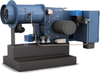
from Industrial Combustion, LLC
Suitable for firetube, watertube and cost iron boilers; the V series features a unique aerodynamic air damper design which permits accurate air-to-fuel settings for maximum combustion efficiency. The standard V series offers natural gas, propane gas, pressure atomized #2 oil and combination gas/oil... [See More]
- Atomization Method: Pressure Jet
- Application: Firetube/Watertube
- Burner Type: Nozzle Mixing
- Combustion Fuel: Natural Gas (optional feature); Light Oil (optional feature); Propane (optional feature)