
USB Digital Voltmeters
Last Updated: April 1, 2025
Description
USB Digital Voltmeters are electronic devices designed to measure electrical voltage levels. They are capable of measuring both alternating current (AC) and direct current (DC) voltages. These devices typically display readings in a digital format, often with a precision of three to seven digits. Some models are equipped to capture minimum and maximum voltage spikes, measure root mean square (RMS) values, and display signal power in decibels. USB Digital Voltmeters can also monitor other parameters such as resistance temperature detectors (RTDs), thermocouples, transistors, and diodes.
Working Principle
USB Digital Voltmeters operate by converting the analog voltage signal into a digital format using an analog-to-digital converter (ADC). This conversion allows for precise and accurate voltage readings, which are then displayed on a digital screen. The digital format minimizes errors associated with analog readings, such as parallax error, and provides a clear numerical representation of the voltage level. These voltmeters are useful because they offer high accuracy and precision, making them ideal for applications where exact voltage measurements are critical.
Applications
USB Digital Voltmeters are used in a variety of applications. They are commonly employed in laboratory settings for testing and measuring electrical circuits. In industrial environments, they are used for monitoring and troubleshooting electrical systems. Specific examples include measuring the voltage output of power supplies, testing battery voltage levels in automotive applications, and monitoring voltage levels in renewable energy systems such as solar panels.
Advantages over other Materials - Ceramics, Glasses, Refractories, and Cements
While the comparison of USB Digital Voltmeters to materials like ceramics, glasses, refractories, and cements is not directly applicable, it is important to note that digital voltmeters offer advantages in terms of precision and accuracy over traditional analog devices. Unlike materials such as ceramics and glasses, which are used for insulation and structural purposes, digital voltmeters provide precise electrical measurements, which are crucial for electronic applications.
Limitations
One limitation of USB Digital Voltmeters is their dependency on a power source, as they require electricity to operate. Additionally, while they offer high precision, they may be more susceptible to damage from physical impacts compared to more robust analog devices. Environmental factors such as extreme temperatures or humidity can also affect their performance.
Considerations
When selecting a USB Digital Voltmeter, several factors should be considered. Initial costs can vary depending on the features and precision required. Operating expenses are generally low, but it is important to consider the cost of replacement batteries or power supplies. Durability can be a concern, especially in harsh environments, so selecting a model with a robust design is advisable. Accuracy is a key consideration, and users should choose a voltmeter with the appropriate level of precision for their specific application. Replacement and maintenance costs are typically minimal, but regular calibration may be necessary to ensure continued accuracy.
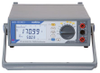
from RS Components, Ltd.
Metrix MX5060 Multimeter [See More]
- Output Interface: Universal Serial Bus
- Measurement Type: AC; DC
- Form Factor: Bench top
- Operating Temp: 0.0
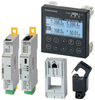
from SOCOMEC
The DIRIS Digiware system is a hub of technological innovations that revolutionises the world of measurements, bringing a high degree of flexibility to installations and making connection and configuration easy. These innovations, together with unrivaled performance in terms of accuracy and... [See More]
- Output Interface: Universal Serial Bus; RS232; RJ45
- Measurement Type: AC
- Form Factor: Rack mount
- Phase: Single Phase; Three Phase

from Albér
The Alber CVR+ Cell Voltage Recorder Plus. The CVR+ cell voltage recorder by Alber directly measures and records cell float voltage, uploads temperature and specific gravity (SG) measurement data from a DMA ‑35 or DMA ‑35N digital hydrometer, and downloads data to a computer running the... [See More]
- Output Interface: Universal Serial Bus
- Measurement Type: DC
- Form Factor: Handheld
- Display Digits: 4 Digits

from Boonton Electronics Corporation
Boonton ’s versatile 4541 (1 Ch) and 4542 (2 Ch) combined Peak / Average Power and Voltage meters are leading edge instruments for most accurate RF measurements. Features like high dynamic range, rise time of less than 7ns and an effective time resolution of 200 ps provide the greatest detail... [See More]
- Output Interface: Universal Serial Bus; GPIB; RS232; LAN
- Display Digits: 7 or more digits
- Form Factor: Bench top
- Bandwidth: 9900 to 4.00E10

from OMEGA Engineering, Inc.
The Omega ® CA450 Process Multimeter is a portable test instrument to combine a digital RMS multimeter and a loop calibrator to give process technicians the same functionality in one tool. The model CA450 provides 24V loop power, reducing the need for carrying a separate power supply when... [See More]
- Output Interface: Universal Serial Bus
- Display Digits: 5 Digits
- Measurement Type: AC / DC
- DC Voltage: 0.0 to 1000
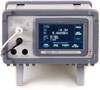
from Vitrek Corporation
The Vitrek 4700 Precision High Voltage Meter offers the highest level of measurement accuracy, yet with its color touch screen – is surprisingly easy to use. Vitrek leverages DSP technology to provide outstanding AC &DC voltage measurement accuracy, stability, repeatability and resolution. [See More]
- Output Interface: Universal Serial Bus; GPIB (optional feature); RS232; Ethernet
- Measurement Type: AC; DC; AC / DC
- Form Factor: Bench top
- Phase: Single Phase (optional feature); Three Phase (optional feature)